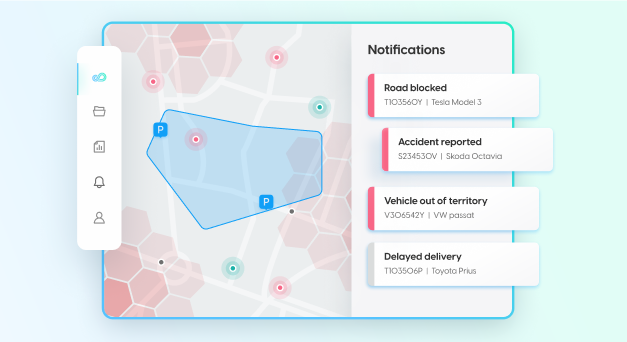

We all know holiday demand adds deliveries, but that’s not where the season’s challenges end. During peak season, last-mile delivery is especially vulnerable because it sits at the end of the supply chain and must absorb disruptions originating upstream. Higher activity introduces variability across order intake, depot processing, driver availability, traffic, delivery windows, and vehicle capacity. In a large network, this makes last-mile operations far harder to control: a single small delay upstream can ripple downstream across hundreds of routes.
Why the holiday surge hits last-mile providers harder than anyone else
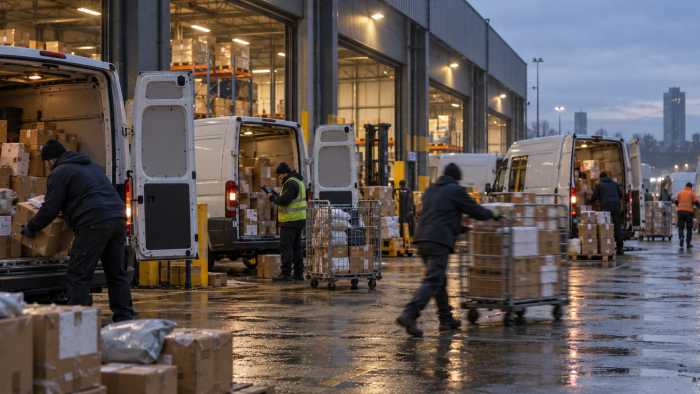
Holiday volume is rarely distributed evenly. While last-mile delivery companies may see a gradual ramp-up in business, promotions and last-order days can create sudden waves on top of the seasonal increases.

In 2025, Evri reported almost 4,000 deliveries every minute on its busiest day during the holiday season. This was thanks to a surge in shopping following Black Friday and Cyber Monday.
No matter the size of your fleet, the added volume at this time of year can squeeze margins and threaten service levels. To make things even more difficult, weather and congestion can add uncertainty when you have the least spare capacity, and upstream delays become last-mile problems. If picking or sortation finishes late, vehicles may leave the depot behind schedule. This means that a route planned around an 8 am departure may no longer be viable.
With increased scale also comes the risk of errors and other issues. These include:
- Inaccurate addresses
- Wrong dimensions for parcels
- Service time issues
- Parcels not matched with vehicle capacities
These inaccurate inputs can create avoidable miles and additional work across thousands of orders. Seasonal labor can also widen the gap between planning and execution. New drivers and depot personnel may take longer to follow or need more help with access instructions and proof of delivery, creating delays and leaving dispatch to handle routine questions while recovering at-risk routes.
All these factors compound on top of each other, and during the holiday season, can quickly snowball into a full day off track. This then risks service-level agreements, customer satisfaction, and employee morale.
The operational guardrails that keep high-volume fleets from breaking
During the holidays, peak plans need defined limits and constraints. This means operators should know the maximum volume each depot, shift, vehicle type, and zone can absorb while meeting service commitments. Once that threshold is reached, the response may include activating reserve capacity, changing the service promise, or using another delivery mode.
These rules should be built into your fleet management system and should cover the following:
- Driver hours
- Breaks
- Loading time
- EV range
- Charging infrastructure (owned and public)
- Parcel dimensions
- Special handling
- Access restrictions
- Maximum and minimum time per stop
Effective last-mile operations require a shared view of these constraints alongside orders, vehicles, and routes without dispatchers switching between fragmented systems. They need access to the current parcel status with automated alerts and workflows to identify exceptions and launch action.
When setting these guardrails, you should also include policies for live intervention. This will dictate when dispatchers can move stops, which assignments are protected, when a route is unrecoverable, and who can approve more capacity. This prevents different dispatchers from solving the same problem in conflicting ways.
Fallback capacity also needs to be tested ahead of the busiest time of the year. Reserve drivers, vehicles, third-party carriers, charging options, and depot space must be operationally available. On top of this, drivers should complete test routes, operators should check integrations under load, and fleet managers should confirm the process for escalating issues.
Where route optimization becomes a survival tool, not a nice-to-have
When deliveries suddenly spike, service levels must still be maintained. If this continually slips during busy periods, the entire organization could be at risk.
At scale, delivery route optimization ensures hypothetical capacity becomes completed stops. The plan must balance delivery windows, shifts, vehicle eligibility, parcel capacity, service times, road restrictions, and route density. This ensures that seasonal increases in demand can be handled quickly without risking service levels, and that routes can be reoptimized to meet changing conditions.
For example, if a depot releases orders 45 minutes late and five routes are projected to miss delivery windows, the system can identify unserved stops, available drivers, and feasible transfers. It can rebalance those stops while protecting completed work, driver breaks, vehicle limits, and priority deliveries.
However, route replanning shouldn’t happen over the entire network after every exception. Operators should be able to lock work already underway, set thresholds for automatic intervention, and limit changes to the area that needs recovery. Large fleets also have more routing solutions available than a van-only approach. Multimodal routing can combine vans, bikes, mopeds, walking routes, and microhubs into a single plan. This gives dispatch more options in congested urban areas, but every mode still needs its own capacity, access, range, and handoff rules.
Measuring whether your fleet is ready before peak hits
Last year’s route count and a full vehicle roster do not prove you’re ready for the holiday season. Fleet optimization should be tested each year against expected volume, constraints, and disruption. You can run some plans with simulated demand to check if our fleet is ready.
The most useful readiness indicators include:
- Unassigned orders after planning: This shows whether the fleet can absorb forecast demand.
- Planning and replanning time: Routes must be ready in time for depot and dispatch decisions.
- Projected versus actual on-time performance: A persistent gap suggests that service times, departure assumptions, or other inputs are unrealistic.
- Capacity utilization by depot, shift, and vehicle type: Network averages can hide local overload.
- Stops per route and miles per stop: These measures show whether additional volume is improving density or creating inefficient travel.
Additionally, take a look at these historic indicators:
- Route completion variance: Large differences between planned and actual finish times point to unstable routes or inconsistent execution.
- First-attempt delivery rate: Failed attempts consume capacity again when the next day’s network is already full.
- Manual interventions per 100 routes: A high rate can reveal weak plans or poor data.
- Data and status latency: Delayed location or completion data reduces the time available to rescue at-risk routes.
Each metric needs an intervention threshold, automated workflows and triggers, and an owner who will be alerted and can step in if necessary. If projected on-time performance drops below target, the team should know whether to release capacity, change cutoffs, rebalance territories, or protect priority SLAs.
Readiness tests should simulate a late trailer, driver callouts, slower service times, bad weather, vehicle downtime, and lost charging speed and battery capacity due to temperature. The aim is to find the point at which the operation becomes unstable while there is still time to change the plan. This helps avoid making promises you can’t keep.
Autofleet helps delivery operators plan, dispatch, monitor, and continuously improve complex fleets from a single platform. Explore our last-mile routing and operations capabilities to see how dynamic planning can support predictable execution when volume and variability rise together.



Table of сontents
.avif)