
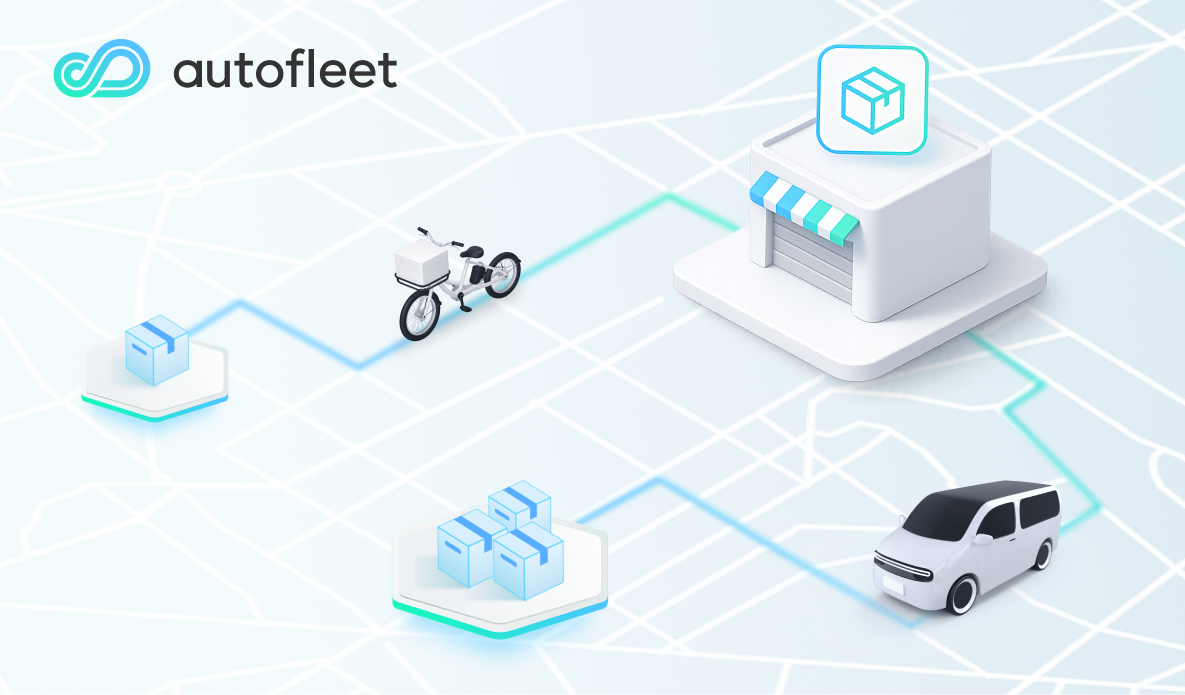
Postal operators and last-mile delivery providers have always managed multiple delivery modes: vans, bicycles, and on foot. To them, multimodal deliveries may not be new, but routing that integrates all the different modes of transportation into a single unified and optimized route plan may be the operational shift that's been missing.
Previously, manual mode splitting meant each team used separate tools to manage routing. This led to operational silos and inefficient routes with no central visibility over deliveries.
Multimodal routing for postal operators, as well as the use of multimodal transportation modes in last-mile delivery operations, brings everything into one place. This enables more cost-effective routes across all transport modes, including mixed driving and walking routes.
Why are postal and last-mile operators adopting multimodal routing
Last-mile delivery routing is more important than ever as last-mile operators navigate higher demand and narrower delivery windows.
E-commerce demand
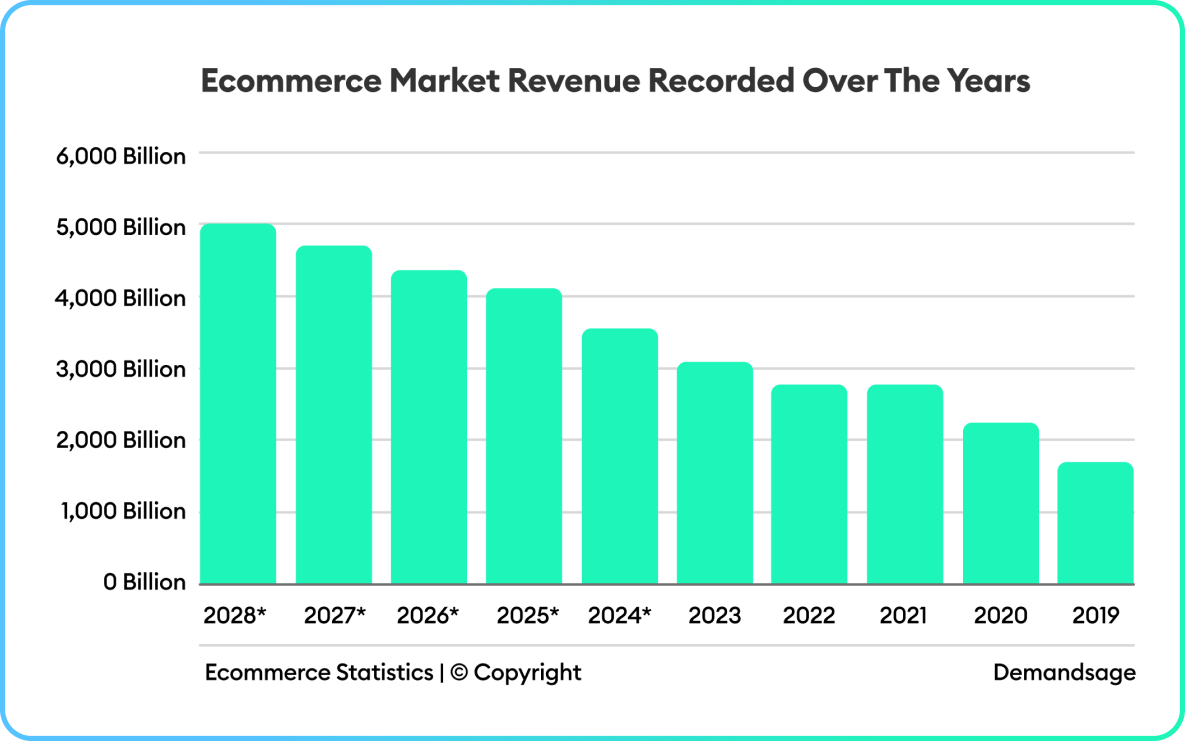
In 2026, E-commerce sales are expected to increase 7.2% on 2025. Much of this is driven by social commerce, which is set to grow at a 30% compound annual rate by 2031.
As a result, operators are under pressure to deliver more within ever-shrinking time windows. This can only be achieved with more efficient routes. For example, one operator reported a 10% reduction in miles driven using AI routing, while another grew its delivery volume by more than 50%.
Urban constraints
According to the most recent data, there were 320 low-emission zones across Europe. Vehicles that don't meet requirements are charged to enter these areas and could face large fines for non-payment. Routing that accounts for this can reduce operating expenditure and help avoid fines.
Sustainability requirements
As well as mandated zero- and low-emission zones in cities, many countries have also implemented targets requiring government-owned corporations, public services, and the logistics sector to reduce CO2. The European Commission has set a target to achieve zero-emission delivery in all urban areas with populations above 100,000 by 2030. This puts any last-mile or postal operator with urban carrier routes directly in scope.
Workforce and productivity
With fewer drivers covering more stops, each route has to work harder. Optimizing delivery routes helps by improving stop density and cutting wasted miles. Integrating legacy systems while improving tracking, routing, and delivery predictions ensures even the busiest operators can meet expectations.
Where multimodal routing delivers the biggest impact
Last-mile and postal operators looking to improve efficiency across van, bike, moped, and walking routes will see the biggest impact across these areas.
Dense urban centers
While vans can carry the most parcels, they become less efficient in busier areas. Operators should understand where it makes most sense to switch to bicycles, cargo e-bikes, or walking routes.
Several studies support the efficiency of e-bikes compared to vans. In congested areas of London, e-bikes complete deliveries 1.6 times faster than vans. In New York City, research confirmed e-bikes could "significantly reduce" the number of large delivery trucks on the road, leading to fewer traffic bottlenecks.
Using bikes efficiently requires using a different map than using traditional vans. Bikes can, for example, cut through parks, but must not use highways and avoid stairs. So, postal operators need a route-planning solution that can plan routes across multiple transportation modes, each with its own constraints and benefits.
Neighborhood clusters and industrial parks
Multimodal routing can have a marked impact on mixed driving and walking routes - where routes include a parking and walking section, alongside the motorized route.
Research based on parcel delivery in London showed that drivers parked and then walked approximately five miles (eight kilometers), taking up 60% of their time worked. This is happening without optimization and with no precise route, which means there's a huge opportunity to make those stops intentional and optimized to maximize route efficiency.
Handling disruptions and peak demand
What works well for most of the year might fall flat as soon as demand increases around Black Friday or the festive season. Dynamic route planning and re-optimization take into account demand, as well as unplanned disruptions. Multimodal fleets can switch transportation modes as required, and update routes in real-time, to be able to make deliveries on time, even when things change.

The operational engine behind mixed fleets, postal and last-mile delivery routing
Multimodal routing for postal operators that run a continuous optimization engine underneath every plan is especially essential. Before drivers even clock in, the system is already calculating the most efficient mode of transportation and sequence of stops across every mode in the fleet.
This takes into account multiple constraints, and if the operational reality changes, it can be re-optimized in minutes across all modes automatically, keeping the best possible plan in play across the whole operation. This includes
- Vehicle and driver constraints: Including shift patterns, service types, electric vehicle range, pedestrian areas, and break-time rules.
- Time windows and delivery promises: Based on delivery priority, parcel sizes, vehicle capacity, and SLAs.
- Traffic and road conditions: Hyperlocal mapping with permitted roads and maneuvers, mixed-fleet support, and real-time traffic.
A delivery operations dashboard keeps a human in the loop at all times to monitor live GPS data and delivery statuses. With automated notifications and alerts, dispatchers have maximum visibility over the entire fleet, no matter whether that's a van, moped, bike, or an operator on foot.
How to operationalize multimodal routing (what dispatch needs on day one)
Multimodal routing only pays off when it matches how dispatch and depot teams run the shift, not when it lives as a planning concept.
The first requirement is clean inputs: orders need consistent service types (signature, locker, attended), package attributes that affect eligibility, and realistic stop locations. Without that, a system cannot reliably decide when a van is required versus when a bike or walking leg is more efficient.
The second requirement is mode rules that reflect real constraints. Dispatch should be able to set eligibility by geography (pedestrian zones, low-emission zones), by time (enforcement windows), and by vehicle and carrier attributes (capacity, range, shift limits). Done correctly, those rules do not become a manual checklist. They become contraints applied automatically to the routing algorithm.
Operationally, the biggest difference in multimodal delivery is the handoff. It allows operators to use a van leg to stage parcels at a legal parking point or micro hub, then run a bike loop or a park-and-walk loop from that anchor. The plan needs to specify the staging point, the walking sequence, and the carry load, so drivers are not improvising at the curb.
Dispatch also needs controls for change, because reality changes every day. If a courier calls out, an EV returns with less range than expected, volume releases late, or a route falls behind, the system should re-optimize the affected territory without thrashing the rest. That means the ability to lock in-progress routes, protect specific assignments, and re-run delivery route optimization for only the routes that are at risk.
Finally, keep proof of execution unified. Proof of delivery should attach to the stop, not the mode, so the chain of custody, photos, signatures, and timestamps remain consistent even when a stop shifts from van to bike to on-foot delivery. When those pieces are in place, multimodal logistics becomes measurable in last-mile delivery optimization outcomes: higher stop density, fewer wasted miles, fewer failed attempts, and more predictable ETAs under daily constraints.
What to Look For in Last-Mile and Postal Operations Routing Software
Not all routing platforms are built for the complexity of large-scale last-mile and postal delivery operations. When evaluating a solution use this checklist and look for:
- Mixed fleet support: The ability to plan routes across vans, mopeds, cargo bikes, and walking segments within a single route plan.
- Constraint handling: Capacity by vehicle type, driver shift rules, break times, and service type eligibility by geography.
- Time window management: Delivery promises, SLA rules, and priority-based sequencing.
- Geofencing and zone rules: Automatic mode restrictions for pedestrian areas, low-emission zones, and curb-access limits.
- Custom and hyperlocal mapping: Editable road networks, permitted maneuvers, and accurate address-level drop-off points.
- Real-time re-optimization: Dynamic rerouting in response to traffic, road closures, staffing changes, or volume spikes.
- Proof of delivery: In-app capture linked to each stop, across all driver and delivery types
- Control tower visibility: Live GPS, plan vs. actual tracking, and automated alerts for dispatchers managing mixed fleets.
- System integrations: Connectivity with existing depot management, parcel tracking, and external demand sources, as well as any other 3rd-party software.
- EV routing: Range-aware routing for electric vehicles, factoring in charging infrastructure and charging policy.

Why multimodal routing matters to postal operators?
Postal networks run high-density, repeatable routes with tight service standards, complex handoffs, and growing parcel volumes alongside traditional mail.
Multimodal routing matters because it unifies routes for van, park-and-loop walking, and bike segments into one optimized plan, so postal operators can increase stop density, improve on-time performance, and reduce miles driven while maintaining consistent coverage across delivery territories.
It also helps postal teams enforce zone rules (pedestrian/LEZ), balance workloads across carriers, and respond faster to daily disruptions without re-planning each mode in separate tools.
Why multimodal routing matters to last-mile delivery operators?
Last-mile delivery is increasingly shaped by narrow time windows, urban congestion, access restrictions, and cost pressure per drop.
Multimodal routing matters because it lets operators choose the most efficient mode for each neighborhood and stop sequence: van where it’s fast or over long distances, bike/walk where it’s faster or required, reducing parking time, failed deliveries, and wasted driving in dense areas. With a single routing brain across all modes, dispatch can scale during peaks, re-optimize in real time, and maintain full visibility and tracking, even when routes mix driving, micro-mobility, and on-foot delivery.
Want to see how dynamic route planning and re-optimization work? Book a demo of Autofleet's routing for postal fleets today.


Table of сontents