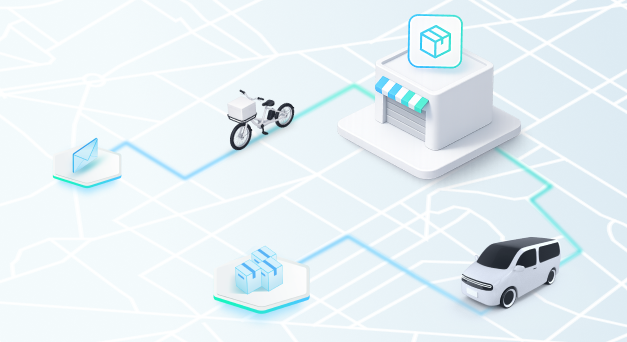

Before the first vehicle leaves the depot, a delivery fleet will know the plan for the day. However, even with parcels loaded and destinations set, there are still many factors that could affect the route.
To stop a well-planned route from veering wildly off course by lunchtime, dynamic route optimization adjusts remaining work using current conditions. For preplanned last-mile delivery fleets, the value of automatically reoptimizing the route comes from changing the sequence and timing of deliveries already on board, and if the plan includes a return to depot, a change in the parcel load can be possible as well.
Why a perfectly planned route stops being optimal by 10am
Last-mile delivery route optimization starts with estimates of how long each journey and stop will take. The morning plan brings together information available before departure, including:
- Delivery addresses
- Time windows
- Vehicle capacity
- Driver shifts
- Expected travel and service times
The route planner gives each driver a sequence to complete within those constraints. Once deliveries begin, even a small delay can ripple across the whole day.
For example, if a driver spends five minutes finding parking, or a building’s unloading bay is occupied, it can affect stops further down the line. So while the orders may remain unchanged during the shift, other factors can quickly impact what was once a perfect plan.

What reoptimization does to a route that’s already running
Dynamic route optimization reassesses the outstanding work from the vehicle’s current position and operational status. It considers what has been completed, what remains on board, and whether the existing sequence still provides a workable way to meet delivery commitments.
The system updates arrival times and finds faster roads to the next address. Crucially, the engine also evaluates whether a different order of stops would improve the remaining route. Taking into account parameters such as client priorities, time-window commitments, and more.
For example, if a van is running behind after a difficult stop but has a business delivery that must arrive before its receiving desk closes, the system can take that into account. Reoptimization can assess whether bringing the business delivery forward to meet its SLA would still allow other deliveries to arrive within the time-window commitment and protect the deadline.
If the revised sequence is viable, the driver will receive an updated route and affected customers will receive revised ETAs. The key point is that all parcels remain on the van and there’s no need for a handover to another vehicle, which could ultimately cause more delays.
There are also limits within the loaded vehicle to consider, though. Moving a stop forward may be impractical if its parcel is buried behind goods scheduled for earlier deliveries. Loading arrangements and parcel accessibility therefore need to inform which changes are workable.
Depending on the operation, other feasible adjustments might include:
- Moving a flexible stop later to accommodate a delay elsewhere
- Removing a canceled delivery from the visit sequence while retaining its return requirements
- Adding a collection where capacity and timing allow
- Rescheduling a failed attempt when another visit is permitted and practical
Each adjustment needs to be assessed against the remaining route. Improving one arrival time has limited value if it creates several missed commitments later.
The cost of holding onto a plan that no longer fits
When a route remains fixed despite changing conditions, fleets carry avoidable inefficiencies until the end of the shift. For example:
- A driver might follow the original sequence into a congested area when other deliveries could be completed first.
- A time-sensitive stop could become a failed attempt, adding handling and another journey.
- Accumulated delays may push the route into overtime.
- Dispatchers have to spend time manually checking progress, calling drivers, and arranging recovery work.
Across a large fleet, even small problems can create a substantial coordination burden. For a fleet of 50 vans, just 15 minutes of avoidable overrun per vehicle adds up to 12.5 driver hours in a single day. Where those overruns incur overtime, they directly increase the cost of completing the same delivery workload.
Where preplanning and dynamic routing work together
Before departure, fleet route optimization determines which vehicles carry which orders and supports loading and departure schedules. Once vehicles are on the road, dynamic routing works within those decisions to adjust the remaining sequence.
For example, preplanning might assign a refrigerated delivery to an appropriate vehicle and position it within the customer’s receiving hours. Mid-shift reoptimization must preserve those requirements while evaluating whether its position in the remaining route should change.
The same applies to driver shifts, vehicle access restrictions, and parcel-handling requirements. A revised plan has to remain executable within the constraints that shaped the original.
As explored in the magic and math behind route optimization software, routing involves evaluating many possible combinations against operational objectives and constraints. During execution, some decisions become fixed, while others can still change.
The relationship also works in the other direction. Actual travel times, service durations, and recurring access problems can inform future planning. If a particular delivery regularly takes longer than expected, incorporating that information into the next plan reduces the need for repeated intervention.

What dispatchers need in place before routes can change mid-shift
For reoptimization to work, dispatchers need an accurate view of the operation and a reliable way to put changes into practice. Real-time route optimization depends on reliable data, clear rules for changing the plan, and communication that keeps everyone working from the same instructions.
First, the system needs to know what’s happening. This means dispatchers need:
- Vehicle location
- Current delivery statuses
- Parcel-to-vehicle assignments
- Customer time windows
- Realistic service durations
- Driver availability
- Available capacity (for collections)
Second, operators need clear rules governing changes. These should establish which stops can move, which must remain fixed, and which exceptions require dispatcher approval. On top of this, rules should be in place to protect a stop already in progress and limit changes immediately before arrival.
Finally, drivers and customers need consistent information. Drivers must receive clear, up-to-date instructions with a way to report access problems or other conditions that make a proposed change impractical. Customer notifications should reflect revised arrival times while preserving the distinction between an ETA and an agreed delivery window.
When evaluating route optimization software for fleet operations, operators should examine how these capabilities work together. A revised route delivers value when drivers can execute it, and dispatchers can see it working.


Table of сontents