
The limitations of static route planning in modern logistics operations
Static route planning gives dispatchers, drivers, and operations teams a starting point. It helps allocate work, sequence stops, estimate timings, and plan capacity before vehicles leave the depot.
However, a fixed route plan assumes orders are known in advance, vehicles are available, drivers start on time, and traffic behaves as expected. One small disruption and the plan can be pushed so far off course that it's impossible to recover.
Common issues that affect static route planning include:
- Urgent same-day orders that need to be inserted into existing routes
- Failed deliveries that need to be rescheduled
- Drivers delayed by traffic, loading, parking, or customer access issues
- Vehicle breakdowns or unexpected availability changes
- Capacity constraints that change during the day
- Customer updates that affect timing or priority
Smaller operations might be able to absorb some of these issues. But they compound quickly, across multiple time-sensitive deliveries. This could lead to reputational damage and fines for breaking service-level agreements.

What dynamic routing means for logistics fleets
Dynamic routing is the process of updating route plans during live operations based on real-time data, changing constraints, and current operational priorities. While it is related to route optimization, it is not the same.
Route optimization creates the best possible plan based on known inputs. For a deeper breakdown of the underlying logic, take a look at the magic and math behind route optimization software.
Dynamic routing, on the other hand, can also be described as the reoptimization of a route. It allows the plan to change after execution has begun. It takes live operational signals to decide how routes should be adjusted based on real-time data.
Static vs dynamic routing
The difference between static and dynamic routing is clearest when you look at how each approach handles change.
Static planning can create an efficient starting point, but it relies on the day unfolding as expected. Dynamic routing gives logistics fleets more flexibility and control, protects efficiency during execution, and improves responsiveness when conditions change.
How real-time reoptimization transforms route execution
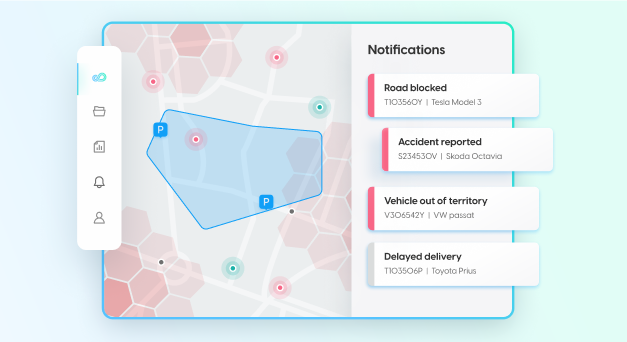
When the current plan is no longer the best plan, real-time reoptimization helps fleets respond to changing conditions. Depending on the circumstances, the logistics routing software might resequence a few stops, move a job from one driver to another, update customer ETAs, or alert a dispatcher to make a decision.
A typical reoptimization workflow looks like this:
- The initial route plan is created - The system uses orders, stops, vehicles, drivers, depots, time windows, capacity, and business rules to create an executable plan.
- Live data enters the system - Data from telematics, driver apps, order systems, customers, traffic feeds, and proof-of-delivery tools is ready to feed decision-making.
- The system detects a change or risk - From that live data, the system might identify a late stop, cancelled order, or driver delay.
- Evaluation of available options - Route optimization algorithms assess what changes are feasible based on current objectives and constraints, and which route update creates the best operational outcome.
- The route is updated - Depending on the setup, the system will either automatically adjust the plan or ask a dispatcher to approve the change.
- Drivers, dispatchers, and connected systems receive the update - This feeds into driver apps, customer notifications, dispatch dashboards, and reporting tools.
- Performance data informs future planning - Planned versus actual performance can then be used to improve assumptions, refine constraints, and strengthen future route plans.
If you want to explore automation beyond dynamic route planning and reoptimization, our guide to artificial intelligence for fleets dives deeper into this.
The data inputs that power dynamic routing systems
Dynamic routing will only ever be as good as the information that feeds it. You need good-quality operational data as the system cannot make reliable decisions without a view of what is happening across the fleet.
Important data inputs include:
- Order details, including delivery location, priority, size, and service requirements
- Delivery time windows and SLA commitments
- Vehicle capacity, type, availability, and restrictions
- Driver shifts, breaks, skills, and working rules
- Depot, hub, and loading constraints
- Traffic and road condition data
- Customer changes, cancellations, and new bookings
- Live route progress from driver apps or telematics
- Proof of delivery and task completion status
- EV battery state, charging needs, and charger availability where relevant
The more complex the fleet, the more important data becomes. The complexity might be based on the size of the fleet, the types of vehicles, or delivery constraints.
Operational benefits of moving from static planning to dynamic routing

The benefits of dynamic routing are often described in broad terms as lower costs, better efficiency, and improved customer experience. While those business outcomes are important, the day-to-day improvements are much more specific.
For last-mile delivery teams, dynamic routing can help reduce manual replanning, improve ETA accuracy, reduce total cost of ownership, and make better use of available drivers. It's important to set KPIs and measure important metrics to understand the real benefits of this type of automation.
Typical benefits include:
- Fewer miles driven through better sequencing and reassignment
- Less idle time and unnecessary waiting
- Better vehicle and driver utilization
- More accurate customer ETAs
- Improved on-time delivery performance
- Fewer missed delivery windows
- Less dispatcher workload during disruptions
- Better visibility of planned versus actual performance
- More consistent service as route volume grows
When logistics fleets should transition to dynamic routing
Not every fleet needs full real-time reoptimization on day one. For some operations, static routes and periodic route reviews may still be enough. The need becomes clearer when route variability starts creating operational pressure.
A fleet may be ready to move beyond static planning if:
- Dispatchers spend too much time manually adjusting routes
- Same-day orders, cancellations, or priority changes are common
- Delivery windows are becoming harder to protect
- Route plans often look very different from actual execution
- Customers expect accurate live ETAs
- Planning depends too heavily on a few experienced people
- Exceptions are discovered too late to fix easily
- The operation wants to scale without adding more dispatch headcount
- Fleet leaders cannot clearly see why routing performance varies
How to move from static planning to dynamic routing
When you're ready, the transition doesn't have to happen all at once. In fact, we recommend you take a phased approach. Start with the parts of the operation where better routing would make the biggest difference.
If you'd like to explore how dynamic routing could work across your operation, book a demo here.


Table of сontents
V4new%252026.11.jpeg)