






Growing a fleet from 50 to 17,600 vehicles is one challenge. Doing it without exponentially multiplying the manual work is another.
That was the experience Element Fleet Management’s Phillip Sadberry brought to “Fleet Operations, Unfiltered: Operators Share What Actually Works for Scale.” Hosted by Autofleet’s Nicole Valenzuela, the webinar also featured Bolt Drive’s Eimantas Balčiūnas and Voyager Global Mobility’s Jeremy Moskowitz.
Their message wasn’t simply to add more technology. It was to automate the right work, measure what drives vehicle productivity, and keep people focused on the decisions that require their expertise.
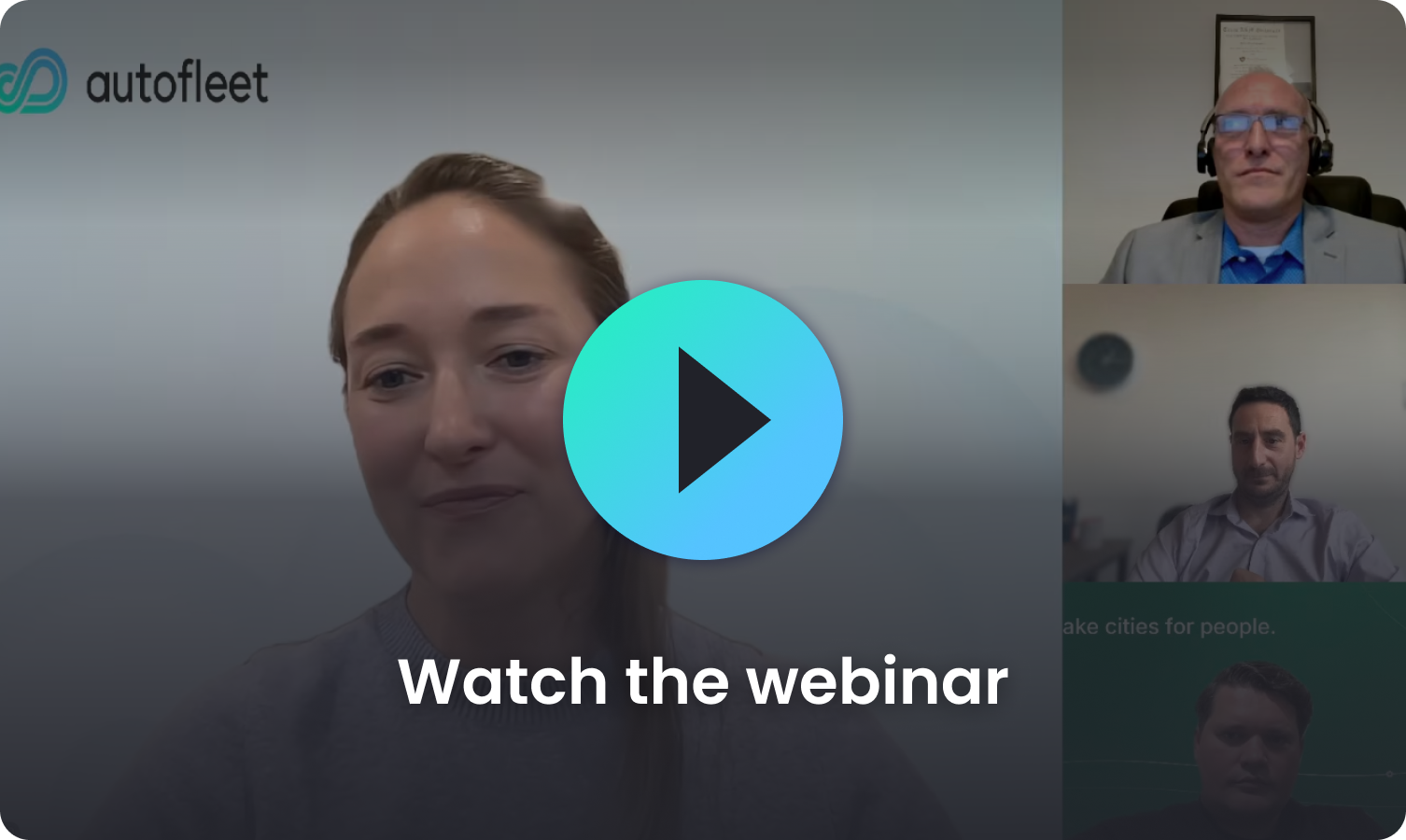
On-demand webinar
Watch the full webinar
Hear how Element Fleet Management, Bolt Drive and Voyager Global Mobility scale fleet operations. Enter your details to start watching.
Fleet automation empowering growth
Philip Sadberry shared how coordinator capacity increased from roughly 60 vehicles to more than 160 by removing repetitive steps and freeing people to support a larger fleet through API connections or workflow automation.
With Autofleet, vehicles progress through operational workflows without waiting for someone to manually update the system. Coordinators scan a vehicle to see its next required task. Once it is rental-ready, the client is notified and can reserve it directly.
The impact goes beyond administrative convenience. It allows scaling that actually works.
But scaling also means knowing what not to standardize: when Bolt Drive trains teams on shared processes, they adapt those processes to each market's needs. VGM starts new projects where it already has local infrastructure and repair relationships. Consistent workflows matter, but they still need to reflect the conditions in which vehicles operate every day.
How to ensure larger fleets perform better
For Bolt Drive, managing performance means looking beyond purchase price, fuel and repairs. Balčiūnas described tracking the total cost of ownership, which also includes administration and parking, as well as vehicle downtime and utilization.
Moskowitz offered an equally important warning about reading fleet KPIs in isolation. One VGM medical transport project moved to fewer vehicles, but that was because they were actually able to generate more revenue per vehicle after optimizing operations. A smaller vehicle count was not evidence of declining performance.
Fleet optimization therefore starts with the business outcome: vehicle readiness, profitable service delivery or productive operating hours, not growth for its own sake.
Keep people in the decisions that matter
Moskowitz posed a practical scenario: an EV breaks down on a Pennsylvania back road at 3 a.m. A dashboard can show it is unavailable. An experienced operator must decide how to get it ready for the next morning, potentially choosing a faster repair rather than waiting for the warranty process.
Bolt Drive echoed that distinction: automate data collection and analysis, but free people to make operational decisions. For Element, local coordinators still identify damage that imaging misses and resolve exceptions such as vehicles delivered to the wrong location.
Optimized fleet management connects that human judgment with reliable workflows and timely information. As Sadberry put it, when operations run well, “the operations team can breathe.”
Explore Autofleet’s fleet operations software or book a demo to learn how to optimize fleet operations as your business grows.


Table of сontents
Frequently Asked Questions
Our Latest Insights

Stay up to date!
