


Why Shared Mobility Has More Environmental Impact Than Individual Transport Modes
While walking or cycling around a city sounds great, they do not answer many transportation needs. Shared mobility solutions, especially when those vehicles are electric, can significantly cut emissions. According to a University of California, Davis study, for example, replacing a gasoline-powered ride-hailing vehicle with an EV could deliver three times the carbon benefit of electrifying a personal vehicle.
There’s a wider objective here, too. UN Sustainable Development Goal 11.2 calls for safe, affordable, accessible, and sustainable transport for everyone by 2030. Shared services help fill gaps in access to transportation.
But these benefits aren’t automatic. A vehicle driving empty across town still uses energy. And someone booking a shared ICE vehicle creates a different environmental outcome from someone booking an EV. If you want your fleet to have a positive impact, here are five ways to reduce its environmental footprint.
The 5 Ways Shared Mobility Services Can Minimize Their Environmental Footprint
1. Cut miles driven without passengers
In ride-hailing in particular, the journey to pick up a passenger adds to the fleet’s mileage without adding revenue or providing any service. The same is true for any fleet vehicle driving to reach a charger or reposition a vehicle. Some of this is necessary, but poor planning can mean vehicles travel much further and more often than they need to.
This empty mileage costs: money. Fuel, electricity, and paid driver time, are used without completing a passenger trip. Breaking that mileage down into pickups, repositioning, and journeys for charging or maintenance helps identify where the highest avoidable costs sit, and which changes would release more capacity for paid trips.
As we explained in a previous article, repositioning has an environmental cost. Moving another vehicle into an area that already has enough capacity may achieve very little. Look at where trips finish, where the next bookings begin, and which vehicles can serve them.
2. Make electrification fit the operation
Replacing heavily used combustion vehicles with electric vehicles (EVs) can reduce emissions, but those vehicles still need time and a suitable place to charge. When switching to electric, consider these questions:
- How far does each vehicle travel?
- When does it stop?
- Can it charge during those breaks?
- Would charging interrupt service?
For business leaders, the investment case needs to account for the cost of maintaining service throughout the transition to EV. Include charging infrastructure, public charging prices, and any additional vehicles needed to cover charging downtime. Test these assumptions against real booking patterns: a vehicle may have enough range for the day but still need to charge during your busiest hours.
Good EV fleet management software brings battery levels, charger availability, and upcoming bookings into dispatch decisions. This helps avoid sending a vehicle on work it cannot finish or taking too much capacity offline at once.
Autofleet’s Fleet Electrification Guide covers planning the transition, including charging strategy and operating costs. With the right approach, this is one of the best ways to reduce the environmental footprint of your shared mobility fleet.
3. Help more passengers share each journey
Two passengers heading in a similar direction don’t necessarily need separate vehicles. Pooling their journeys can reduce the driving needed to get them both where they’re going.
The challenge is making that work for passengers. Nobody wants their short journey stretched by a series of inconvenient pickups. Operators need to balance occupancy with waiting times, accessibility requirements, and acceptable detours.
Dynamic pooling helps match compatible journeys as bookings arrive. Measure how often passengers actually share a vehicle, alongside the additional distance involved.
4. Check whether you really need more vehicles
Before committing to more vehicles, establish what is limiting growth. Is the fleet genuinely too small, or are vehicles unavailable when and where customers need them? Better scheduling may allow you to serve additional bookings with assets you already own, avoiding another round of lease payments, insurance, and maintenance costs.
For example, vehicles may be unavailable because cleaning, maintenance, or charging is poorly coordinated. Others might sit idle in one location while demand builds elsewhere. Tracking the right utilization KPIs shows which of these is holding the fleet back.
Use a fleet planning simulator to compare fleet sizes, allocation rules, and infrastructure before committing to changes. This can reveal whether better scheduling would provide the additional capacity you need.
A fleet that appears underused across the week may still struggle during peak hours. Test changes against waiting times, rejected bookings, and vehicle availability during disruptions. This gives leaders a clearer basis for deciding whether to invest in vehicles, infrastructure, or improvements to the existing operation.
As you make these decisions for your fleet, don’t lose sight of service quality. A smaller fleet offers little benefit if passengers cannot reliably book a vehicle, potentially causing them to return to using their own cars.
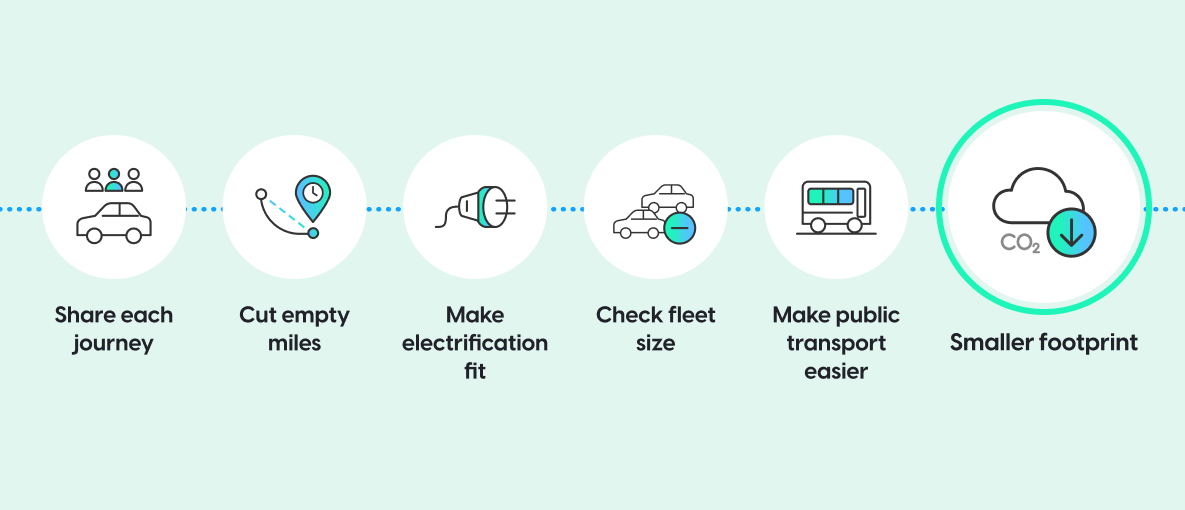
5. Make connectivity to mass transit easier to use
Shared mobility has a useful role in journeys that involve several transport modes. A ride to the station could help someone travel most of the distance by train. Operators can support this through service areas around transport hubs, suitable operating hours, and dependable connections. Waymo recently acknowledged this by launching a public transport rewards program in San Francisco.
Ask passengers how they would otherwise have traveled. This helps distinguish journeys replacing private cars from those replacing walking, cycling, or an existing bus service. It also gives you better evidence of your environmental contribution.
This evidence can also help explain the service’s value to public-sector partners and customers with sustainability objectives. Keep estimates of the emissions avoided by replacing private-car journeys separate from the emissions produced by your own operation.
How Fleet Optimization Amplifies the Impact of Each Sustainability Initiative
One decision across the fleet can affect things elsewhere. For example:
- A pooled journey changes vehicle availability
- A charging stop affects which bookings an EV can accept
- Moving a vehicle may shorten one passenger’s wait while adding empty miles
Fleet optimization helps operators weigh these decisions across the whole service. For business leaders assessing sustainable fleet solutions, the useful question is whether a change reduces the cost and emissions of serving customers while maintaining the reliability that those customers expect.
Track cost per completed trip alongside total emissions, emissions per passenger-mile, and service performance. That makes it easier to see whether an improvement is delivering across the business or simply moving costs and problems elsewhere.
Start with a specific source of waste, establish a baseline, and test the change before expanding it. Evidence from your own operation gives you a stronger basis for approving the next investment and explaining what it is expected to achieve.



Table of сontents


%25C2%25A0V2%2520WS.jpeg)

