


It has almost become a cliché that today’s fleets need to put their data to work for fleet management to remain effective. However, the challenge many fleet operators, logistics companies, and mobility providers face is not the lack of data, but rather its fragmentation.
Telematics data, fleet maintenance records, CRM and ERP systems, predictive analytics, city data, traffic data - there is no shortage of data available to fleet managers. And that data is indeed very useful if you are only looking at one thing at a time. But you are missing so much value if you do.
If you only look at a driver's telematics data, you are missing their fuel spend and maintenance compliance. If you only look at a vehicle’s odometer, you are missing other data points that predict wear and tear. To effectively set policies like cleaning and upkeep, you need a holistic view of multiple inputs.

The Pain of Fleet Data Fragmentation and Siloed Systems
Most fleet managers have faced the frustration of data scattered across multiple platforms. Making operations difficult with telematics data in one system, maintenance logs in another, compliance records elsewhere, etc.
The numbers show how common this is. In a recent poll of 600 global companies running vehicle fleets, 84% were using telematics, asset tracking, or integrated equipment management systems, but only 28% reported that those systems were fully implemented across the fleet. Data accessibility was the single biggest barrier to optimizing utilization, named by 74% of respondents. Fewer than half were receiving live utilization data for most of their assets.
The pattern repeats wherever fleets try to build something on top of their data. Fleet Advantage's 2026 Use of AI in Fleets survey, which polled more than 2,500 private and transportation fleet executives, found data integration had become the top obstacle to AI adoption at 71%, up from 38.1% the year before. Inaccurate data came second at 64.5%, up from 23.8%. Fleets are not short on tools. They are short on tools that agree with each other.
The operational consequences are profound. Fleet operators often experience delays in responding to critical events, inefficient vehicle utilization, and heightened compliance risks due to fragmented and inconsistent data, including data compliance issues.
Another adverse effect of this overload of data and software solutions is what industry insiders call “the swivel-chair effect” - constantly toggling between multiple screens, interfaces, and systems in an attempt to get the information you need.
This adds overhead and reduces productivity. It also significantly increases the likelihood of errors, delays, and inaccurate reporting. Getting operational teams bogged down by data reconciliation tasks instead of proactively managing their fleet and addressing strategic priorities.
The answer lies in an integration solution (such as Autofleet's Integration Hub) to harmonize, sanitize, and consolidate data into a unified view. This provides fleet dashboards that are relevant, actionable, and valuable.
Practical Realities of Implementing Data-Centric Solutions
Deploying comprehensive, data-driven fleet solutions isn't merely about purchasing technology. It involves careful consideration of integration challenges, change management complexities, system compatibility issues, and team readiness.
Stakeholders from multiple departments, including operations, IT, compliance, and logistics, must align on processes, tools, and outcomes. Identifying the right Key Performance Indicators (KPIs) early helps measure the effectiveness of the solution, ensuring clarity and alignment among all parties involved.
As the amount of data keeps growing, fleet operators must prioritize scalability and adaptability that can accommodate future technologies, including electric vehicles (EVs), autonomous vehicles (AVs), evolving regulatory environments, and more.
Sensitive fleet data must be handled responsibly. So maintaining rigorous privacy controls, clear access permissions, and robust auditability mechanisms are essential as well as compliance with data protection regulations such as GDPR or local equivalents.
Before embarking on a data integration initiative, consider the following critical steps:
- Map out your current systems: Identify what data you have available, and find out what is lacking.
- Evaluate internal processes: Look at current redundancies and streamline workflows.
- Identify key stakeholders: Ensure early involvement of operations, IT, and compliance teams.
- Define clear KPIs: Establish metrics to measure success clearly and transparently.
- Ensure a scalable and future-proof solution: Make sure you are using an open system that is flexible enough to meet future requirements.
- Meet security and compliance requirements
To make it easier, we have compiled a Short Planning Checklist for Data‑Driven Fleet Management Strategy.
What to Do When a Vendor's Telematics Data Is Incomplete or Locked
Start by writing down exactly which fields you are missing and what decision each one feeds. A missing fuel level is annoying. A missing battery energy level that blocks automated charging assignments is a business problem. That distinction tells you how hard to push.
From there, you have four practical routes:
- Ask for the field explicitly. Vendors often expose more through their developer API than through their standard dashboard export. Check the developer documentation before assuming the data does not exist.
- Derive it. Some fields can be inferred reliably from what you already have. Engine hours can be estimated from ignition events, and utilization can be calculated from booking data even when the vehicle itself reports nothing useful.
- Bring in the OEM feed. Embedded telematics now ships on most new commercial vehicles, which gives you a second source for the same asset. The catch is that OEM data arrives in its own format and has to be normalized against your existing telematics integration before it is comparable.
- Escalate at contract renewal. Data portability belongs in the renewal conversation alongside price. Ask for documented API access, defined refresh rates, and an export path in a machine-readable format.
Whatever route you take, build your fleet management integration so that a single uncooperative vendor cannot stall the whole project. An integration layer that treats every source as replaceable lets you ship value from the vendors who do cooperate while you work on the ones who do not. Missing fleet telematics data should degrade one report, not the whole dashboard.
Using AI to Manage Data Overload
Setting up the right set of dashboards is the key to making sense of data and filtering out the noise that comes with data overload. Well-designed dashboards highlight the most relevant metrics, providing clarity and focus, and reducing the risk of misinterpretation.
To meet the immense volumes of data from telematics, GPS, driver behavior systems, maintenance logs, and more, AI can be leveraged to filter, analyze, and deliver actionable insights. Embedded large language models (LLMs) such as Autofleet NOVA can also be used to answer fleet-specific questions in plain language. And an automation engine can intelligently merge data from various sources to trigger workflows automatically.
Real-World Examples: Leaders in Fleet Data Integration
Companies like Zipcar and Keolis demonstrate the value of integrated fleet data solutions.
- Zipcar uses a unified data platform to enhance vehicle availability, optimize maintenance schedules, and streamline operations, significantly improving user satisfaction and reducing operational costs
- Keolis faced a challenge with its AV operations using multiple vehicles and platforms. They adopted an integrated data solution for real-time visibility, predictive maintenance, and improved compliance, significantly improving operational efficiency and fleet reliability.
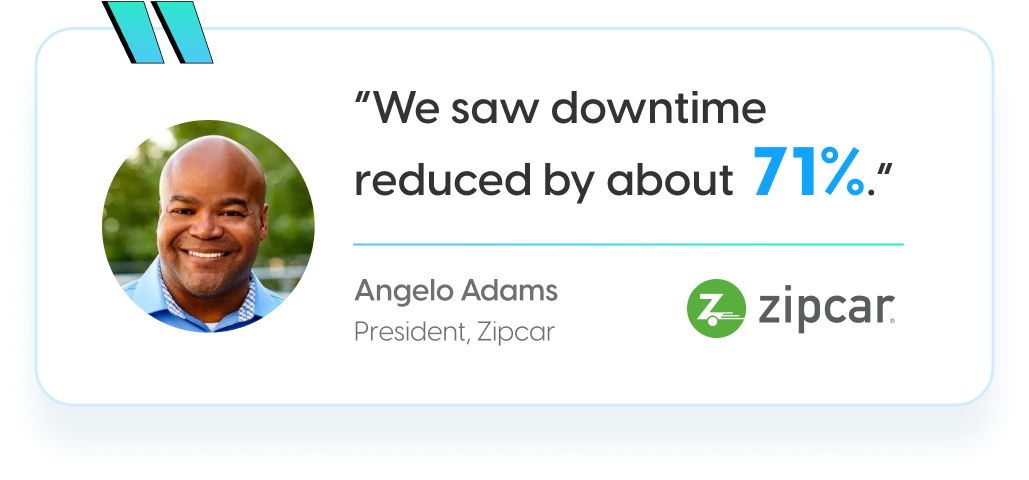
These cases illustrate a crucial insight: Effective data integration simplifies operations and delivers measurable business outcomes, driving higher fleet efficiency and profitability.
Transforming fragmented fleet data into actionable intelligence is key to operational excellence. Companies that successfully unify their fleet data eliminate inefficiencies, enhance visibility, and significantly improve decision-making capabilities. Platforms like Autofleet help companies break down data silos, apply AI-driven insights, and strategically use fleet data to optimize operations, reduce costs, and drive tangible ROI.
To streamline your preparation for data integration, we've developed a Short Planning Checklist for Data‑Driven Fleet Management Strategy. Download it now >>>



Table of сontents


