
Autonomous vehicles represent a transformative shift in mobility, but most AV conversations fixate on autonomy tech and miss the operational reality: running an AV fleet at scale is a full-stack operations problem.
A self-driving car is impressive. Turning it into a reliable, commercially available service, with SLAs, utilization targets, safety governance, and regulatory scrutiny, is where fleet operators win or fail.
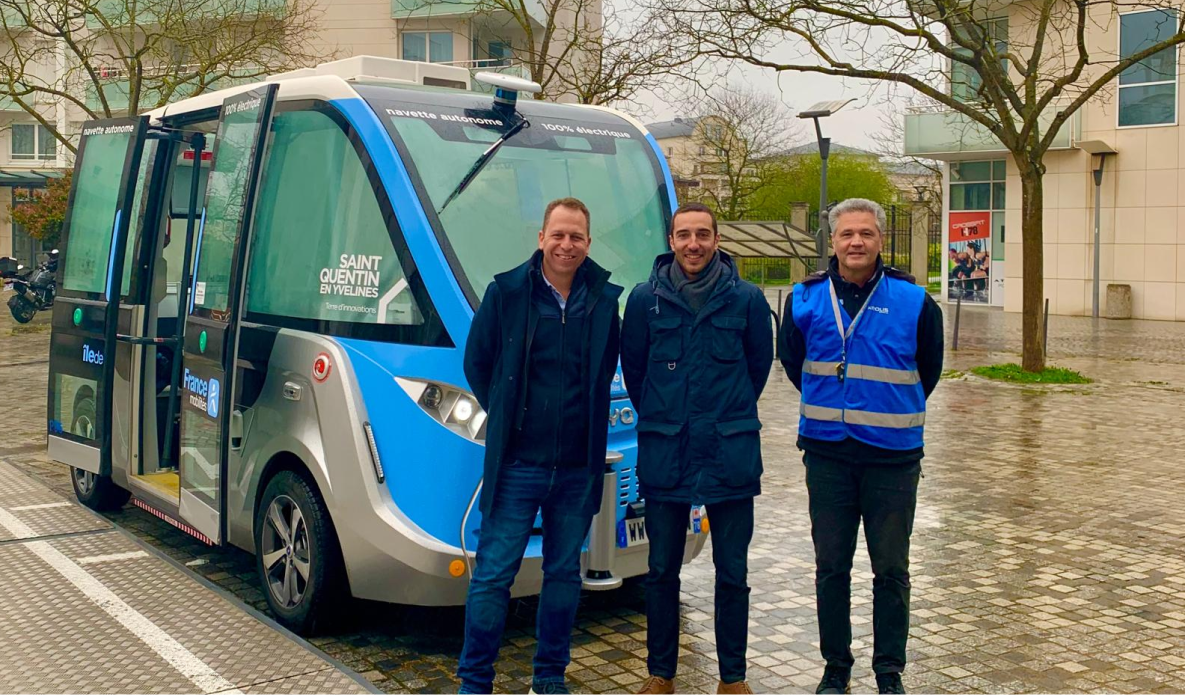
Autofleet is the first company to create and operate an AV fleet management platform. Working with partners like Keolis and Waymo, our AV fleet management solution is used to optimize operations of both autonomous robotaxi services and AV shuttles for public transport.
In this blog, we share our experience building end-to-end solutions for the complexities surrounding autonomous vehicle operations, including managing multiple OEMs and vehicle types, ride hailing and dispatching, extensive reporting to all stakeholders, managing depot operations, and more.
The 5 Operational Challenges Every AV Fleet Meets
Traditional fleet operations are challenging enough. Add autonomy, and you introduce new constraints and dependencies that human-driven fleets rarely face. Here are five operational challenges AV fleets must solve to scale.
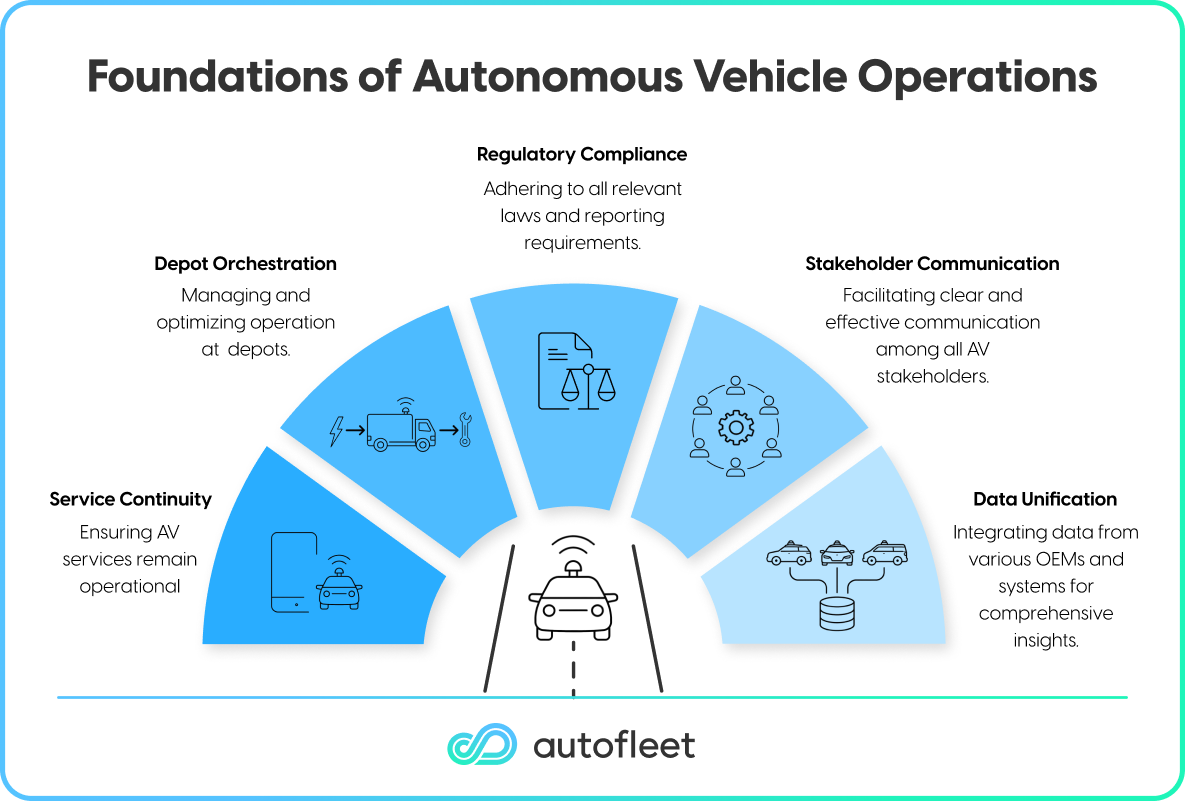
1) Keeping AV Service Running Within Safety Limits
The challenge: AVs operate inside defined Operational Design Domains (ODDs), the conditions under which the automated system is designed to function, such as weather, geography, time-of-day, roadway characteristics, etc. When conditions drift outside the ODD, the fleet must degrade gracefully: reroute, pause service, hand off to remote assistance, or dispatch support.
Why it matters: Customers still expect reliability, predictable ETAs, and consistent service coverage, even in non-ideal environments.
The solution: Use fleet-wide routing/dispatch that:
- Re-optimizes in real time as conditions change
- Manages ODD boundaries as first-class constraints (not “edge cases”)
- Triggers standardized playbooks (reassignment, staging, controlled pauses) to preserve SLA performance

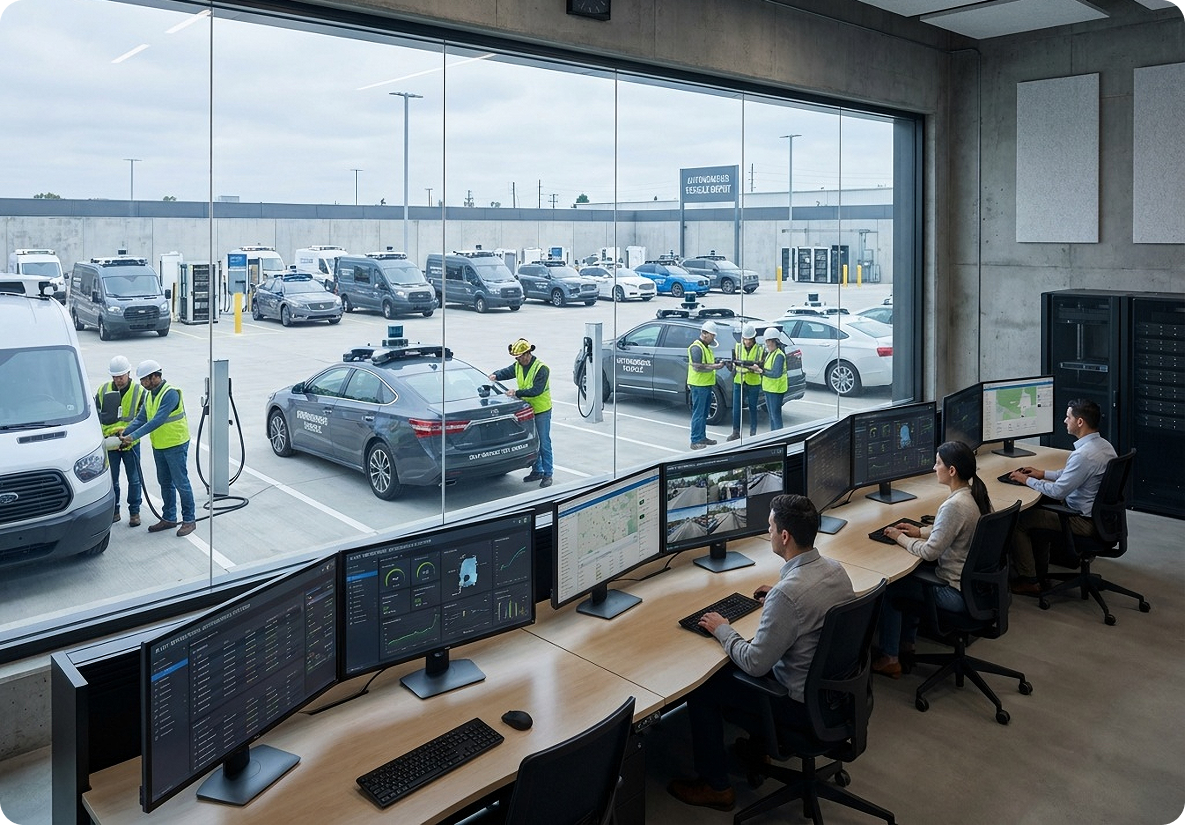
2) Managing Depot Operations in Autonomous Vehicle Fleets
The challenge: AVs can drive themselves, but they can’t:
- Clean interiors
- Perform safety checks
- Complete repairs
- Manage charging
- Recover from failed software updates
- Self-Triage physical damage
Why it matters: Depot and yard workflows become the utilization bottleneck. Idle time compounds into fewer revenue hours and lower service availability. Moreover, AVs and their additional sensors are expensive, making TCO savings from optimal operations valuable.
The solution: Use operations management and optimization to coordinate:
- Automated work orders and inspection flows
- Charging queues, bay assignment, and maintenance scheduling
- Priority rules based on service demand and vehicle readiness
3) Regulatory transparency and compliance reporting
The challenge: AV fleets operate under intense scrutiny. Regulators and cities demand clear evidence of safety performance, incident handling, and operational accountability, and can suspend permits when confidence breaks down.
Why it matters: Your permit and expansion plans depend on it. Compliance isn't a quarterly activity, it's operational.
The solution: Build “compliance by design”:
- Audit-Ready event logs and standardized KPIs
- Automated reporting pipelines (not manual spreadsheets)
- Role-Based dashboards for authorities and internal stakeholders (this reduces overhead and prevents reporting gaps from becoming operational risk)
4) AV stakeholder communication and workflow alignment
The challenge: AV operations introduce more stakeholder roles than traditional fleets:
- Remote Operators/Assistance Teams
- Field Technicians
- Software Debugging Teams
- Sensor Technicians
- Depot Coordinators
- Dispatch and Service Delivery Teams
- Safety and Incident Review
- Regulatory Liaisons
- Customer Support
Why it matters: Each stakeholder needs different tooling and workflows, but everyone must work from the same operational truth. Fragmentation creates delays, inconsistent decisions, and “multiple versions of reality.”
The solution: Create a unified operational layer:
- Integrate third-party systems into a single source of truth
- Use purpose-built apps for different roles (Don't force one UI to serve everyone)
- Enforce closed-loop workflows: Detect → Assign → Resolve → Verify → Report
5) Data unification across multiple OEMs and systems
The challenge: Pilots often run on a single AV platform. Scaling usually means multiple OEMs, each with proprietary data formats, APIs, dashboards, and definitions (e.g., what counts as a disengagement, a fault, a “ready” state).
Why It Matters: Without normalized data, you can't reliably:
- Understand fleet health in real time
- Compare performance across vehicle types
- Automate cross-OEM workflows
- Deliver consistent reporting to stakeholders
The Solution: Implement a data abstraction and normalization layer that provides:
- A single fleet status view
- Consistent analytics and KPI measurment
- Workflow automation across OEM boundaries
- Unified reporting outputs
Smarter AV infrastructure and operations with simulation planning
Ensuring the success of an AV fleet demands capital investment in depots, charging, maintenance capacity, remote operation centers, and staffing models.
AV duty cycles, charging patterns, and maintenance triggers can differ materially from conventional fleets, so leading operators simulate before committing to charging capacity, depot sizing, shift patterns, staging strategy, testing how the disruptions will impact availability.
Simulation also lets operators trial operational strategies (dispatch policies, charging heuristics, response playbooks) before implementing them in the real world.
Bottom line
AV technology is the starting line. Operations determine whether you can deliver reliable service day after day.
Start with data unification. Build purpose-built workflows. Automate what can be automated. And remember: in AV operations, transparency, efficiency, and accountability aren’t nice-to-haves, they’re prerequisites.



Table of сontents