
AVs solve autonomy, not operations. Scaling robotaxi and shuttle fleets requires unified data, automated workflows, depot coordination, and transparent reporting, all enabled by a single fleet management platform. In this blog, we lay out the necessary components for a successful autonomous vehicle operation.
Key Insights
- AV data comes in many formats, making a single normalized data layer essential for smooth operations.
- AV operations still rely on people and vendors, so structured workflows and clear accountability are critical.
- Cities expect transparency, requiring reliable reporting, compliance dashboards, and SLA tracking.
- Unified fleet management is needed to move AV services from small pilots to real operational scale.
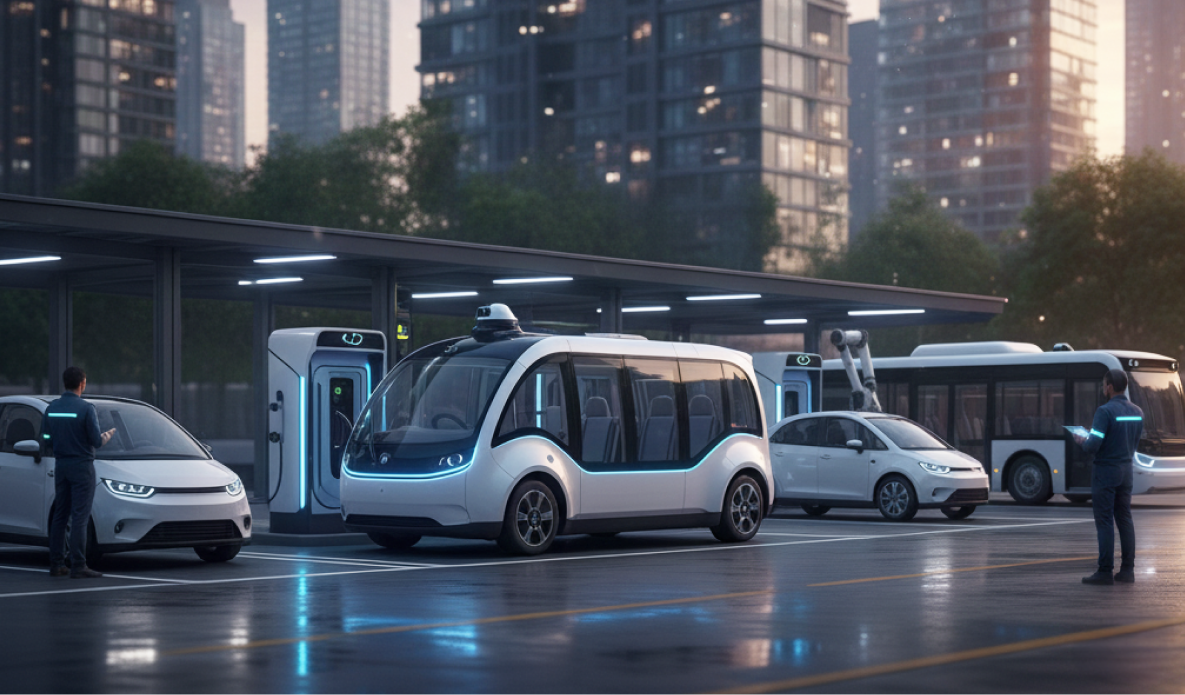
AVs need fleet management, too
While news stories highlight self-driving achievements and expansion into new cities, the real challenge facing autonomous mobility providers is making these services work as actual businesses.
Successful adoption over time, beyond the novel experience of getting onto a vehicle with no driver, comes down to managing a fleet effectively. Some of it is old news that any fleet manager knows like the back of their hand: keeping TCO in check, managing downtime, and maintaining vehicles. But autonomous vehicles come with their own unique challenges too - including software updates, managing safety drivers, bringing together data from all sources, establishing clear workflows, and using systems that work for everyone involved.
Importantly, autonomous vehicle fleets are brand new. They get a lot of attention from industry groups, city officials, legislators, and government agencies (who sometimes commission the AV service to begin with). Everyone is trying to formulate the right framework for AV operations and set the safety and accountability standards (like NHTSA guidelines and safety classifications).
What goes into the AV operations stack
Running an autonomous vehicle service requires an integrated platform that connects every piece of the operation. From vehicle sensors and charging stations to ride requests and city regulations, successful operators bring disparate data streams into a unified system that enables intelligent decision-making across the entire fleet.
One normalized data layer
AV operations require a lot of data: AV signals, telematics, maps, ride requests, charger and depot status, passenger feedback, weather, and street information all flow into a common schema that needs that data to be cleaned and made ready for use. When an AV fleet includes vehicles from multiple manufacturers, normalization, harmonization, and synchronization of data becomes even more essential, risking making the fleet nearly inoperable without it.
This unified data source enables real-time visibility and creates a historical record for accountability, SLA monitoring, and city reporting. Allowing companies running a robotaxi or autonomous shuttle service to demonstrate they're meeting standards every single day, and set up reporting and dashboards aimed at policy-makers.
It provides the foundation for automated workflows that intelligently dispatch vehicles, schedule charging and cleaning, and coordinate maintenance, ensuring the right resource handles each task at the optimal time.
Unified operational control
A centralized command center aggregates rides, vehicle status, and incidents into a single view. Teams can quickly identify anomalies and take action: rerouting a vehicle, triggering a recharge, scheduling sensor calibration, deploying a software update, or sending out a safety diver for a remote or in-person takeover, all without juggling multiple systems.
This shared context, managed through an SSO and roles and permissions system, keeps operations teams aligned, while executives access consolidated KPI dashboards and comprehensive reporting tools.
Purpose-built apps for stakeholders
An autonomous fleet is a complex operation moving in space, and not every stakeholder sits in front of a desktop computer. To ensure governance, each user group needs tools designed for their specific role:
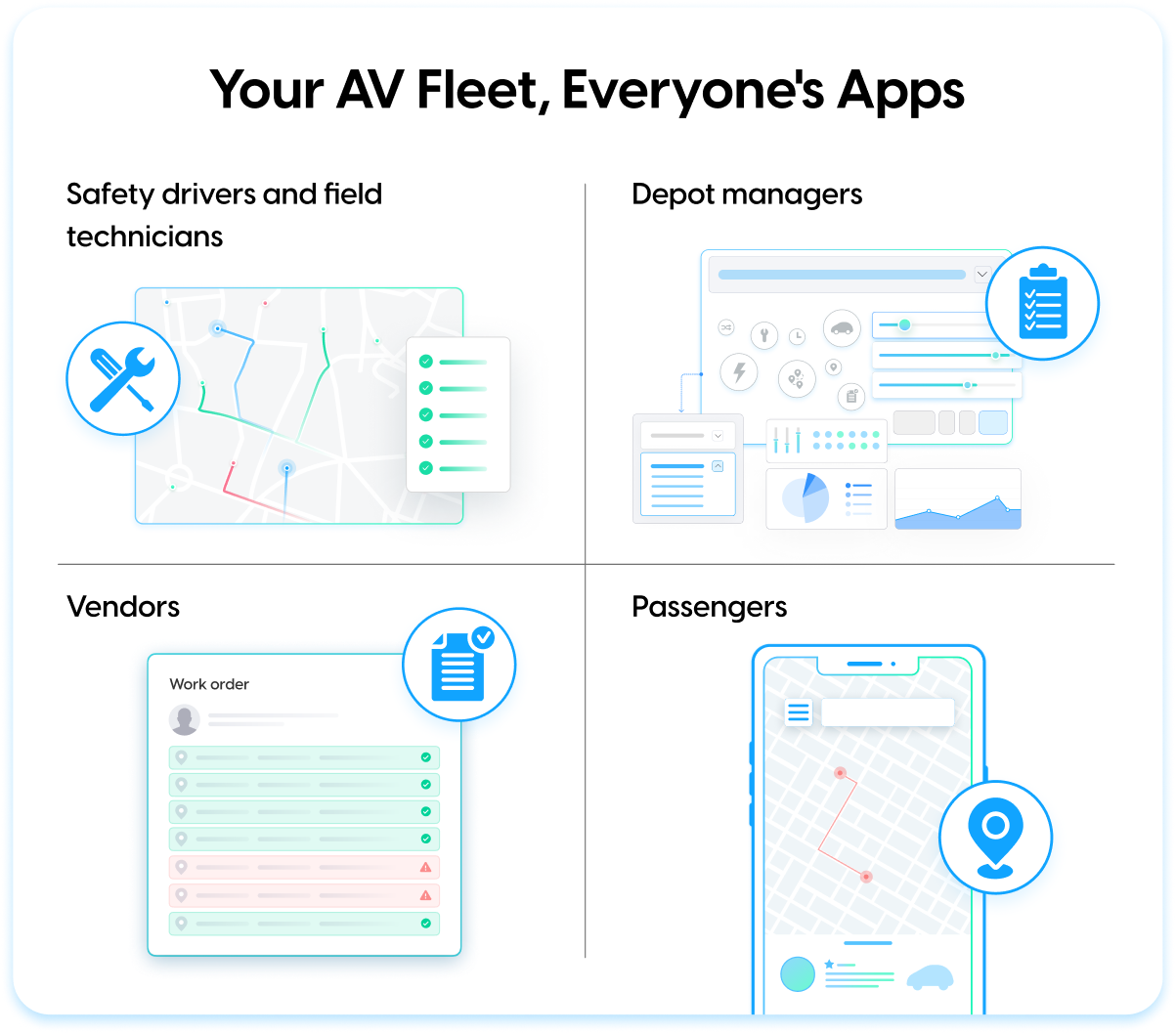
- Field technicians and safety operators need an app with pre-trip and check-in checklists, as well as task assignment and reporting.
- Depot managers coordinate tasks and track vendor SLAs
- Vendors need an app with work orders and proof of completion capabilities
- Passengers need to book trips and track their autonomous vehicles in real time
AV depot operations: cleaning, charging, inspections, maintenance
While on the road, each autonomous vehicle is, well... autonomous. But once it arrives at a depot, it requires a coordinated, contextual response to get it back in service quickly and efficiently.
Fast-charging? Swapping a wheel? Retrieving lost property? Running a post-incident inspection? These are all depot-based fleet actions, and a vehicle often requires more than one. AVs are also harder to manage than conventional vehicles—they need sensor cleaning, calibration, HD-map updates, and software rollouts, yet lack a driver who can handle manual tasks on the road.
Without optimized automated workflows that coordinate between different tasks—some involving vendors and multiple workers—AV downtime becomes a serious operational risk for fleet operators.
The Autofleet approach: optimized AV fleet management
As robotaxi and AV shuttle services expand from pilot programs to full-scale deployments worldwide, operators face growing demands for operational excellence and accountability. Success requires unified data systems, automated workflows, and stakeholder-ready reporting, not a collection of disconnected telematics portals.
Autofleet delivers the complete AV fleet management platform needed to plan, operate, and scale these services seamlessly. The platform brings together multi-OEM vehicle data into a single normalized view, provides a centralized Control Center for daily operations, and automates critical tasks like charging, inspections, maintenance, and cleaning. It includes vendor management with SLA tracking, intelligent routing and dispatch that respects local regulations, dedicated apps for safety drivers and field teams, a passenger-facing booking app, and customizable dashboards that give executives and city partners the insights they need.


Table of сontents