

An autonomous vehicle waiting for a charger or inspection is an asset that’s unavailable to serve customers. If too many vehicles are unavailable during busy periods, the fleet may miss bookings or leave customers waiting despite having enough vehicles on paper.
Infrastructure decisions inform how many vehicles your deployment can keep in service, how quickly it can recover from disruptions, and how long it takes for a vehicle to become available for rides. Planning these resources together is essential to building a commercially viable operation.
What infrastructure planning for AV fleets involves
When it comes to autonomous vehicle fleet management, you need to consider dispatch, vehicle readiness, servicing, and operations support as a whole. The infrastructure planning stage establishes the facilities, capacity, and connections needed to make these functions work together.
While AV depots share some requirements with conventional fleets, such as maintenance and energy infrastructure, AVs differ in how work is identified and completed. Without a driver checking the vehicle, reporting damage, or dealing with a breakdown, those responsibilities must be assigned to systems and teams with clear processes for taking action.
As explored in our guide to the operational foundations for successful autonomous vehicle fleet deployment, cleaning, inspections, charging, and maintenance can become utilization bottlenecks. The planning question is how much capacity each activity requires and how vehicles will move between them.
Start with the intended AV service: its operating area, demand patterns, service commitments, and vehicle requirements. Then evaluate how different infrastructure configurations support it. A centralized depot may simplify staffing, while distributed facilities may reduce travel between service areas and charging.
Autofleet’s Fleet Planning Simulator allows operators to compare fleet sizes, service depots, and charging-station distribution against operational and financial metrics. Use those comparisons to test whether an investment will allow the fleet to complete more trips, reduce time out of service, or meet demand with fewer vehicles. This helps avoid buying additional vehicles when the real constraint is how quickly existing ones can return to work.
Depot design decisions that affect downstream AV operations
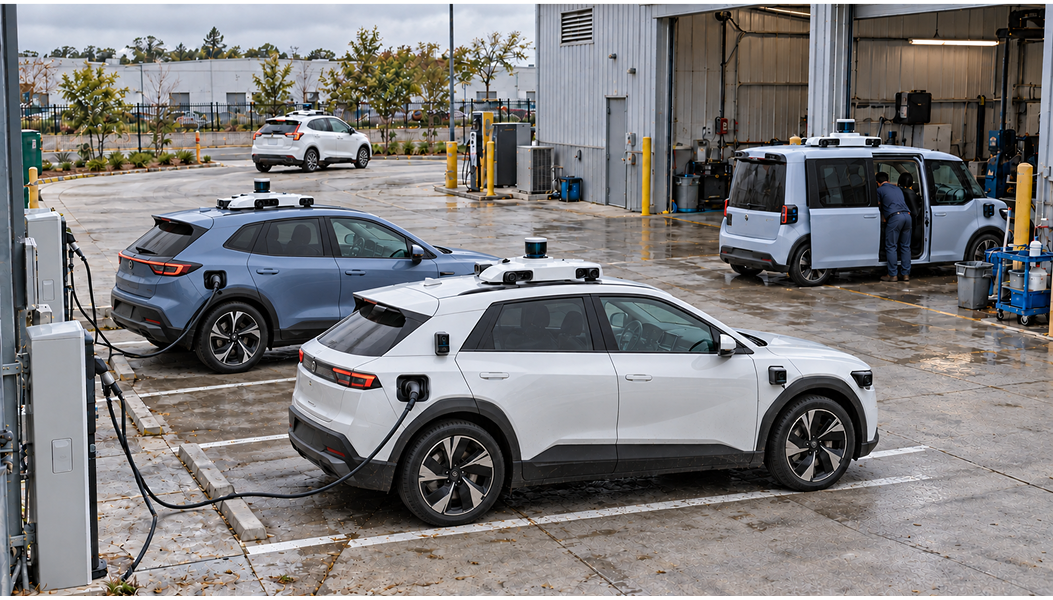
A depot must move vehicles efficiently through the work required to return them to service. Its location, layout, equipment, and staffing all influence turnaround. When designing a depot, consider these elements.
Location and access
Assess candidate sites against customer demand, available power, and the number of vehicles that may need to be on site at any one time. A cheaper location further from demand may increase non-revenue travel and reduce the time for paid work, so this needs to be weighed carefully.
For example, suppose a cheaper depot adds 15 minutes to each return journey between the service area and the facility. Across 100 daily depot visits, that adds 25 vehicle-hours of travel. AV fleet managers should compare the property savings with the additional energy costs and the effect on service coverage. If those journeys remove vehicles from service when bookings are being turned away, a cheaper depot could cost more in missed business than it saves in rent.
The vehicle’s capabilities should also be taken into account. The site should be accessible to an autonomous vehicle and should not require unplanned human intervention for entry and exit.
Layout and workflow
Plan how vehicles enter, queue, receive service, and leave. This includes planning charging spaces, cleaning bays, inspection areas, and relevant maintenance facilities.
A depot may have enough parking for the fleet but insufficient capacity to prepare vehicles for service. If cleaning takes 15 minutes per vehicle, two staffed bays can process, at most, eight vehicles per hour without accounting for movement, breaks, or additional work. If 12 vehicles arrive each hour requiring cleaning, the queue will grow even when chargers and parking spaces are available.
Additionally, not every depot is required to provide every type of service. Plan your AV operations with specialized depots focused on different tasks: frequent, quick, and/or high-priority tasks in central locations, and more time-consuming, less common services in more out-of-the-way places.
Staggering depot arrivals or increasing cleaning capacity could help serve more bookings with the vehicles already owned. This is where fleet management for autonomous vehicles supports proper depot planning.

Charging capacity
Despite some early experimentation with battery swapping, AVs are EVs that still need charging. When reviewing depot locations, you will need to ensure you have the energy required to deliver the service.
The type of chargers you install will depend on dwell time, vehicle charging speed, and electricity rates and more. However, it’s vital that you think about grid capacity, site load limits, and wait times for new connections.
Judge the charging plan by how many vehicles it can prepare for the next service peak and at what cost. Should you include autonomous charging bots, or are human operators better for your operation? Charging at a cheaper rate offers little benefit if it leaves the fleet unable to accept bookings; equally, higher-powered equipment is difficult to justify if existing chargers can meet departure requirements through better scheduling.
You should also make sure to agree on who responds to charger faults, how quickly repairs can begin, and where affected vehicles will charge in the meantime. Consider if you need to have some mobile electric vehicle charging vehicles for roadside assistance. These arrangements limit the risk of an equipment failure becoming a service shortage.
How remote operations centers support AV fleets at scale
Remote operations centers can go a long way in connecting fleet visibility with the people responsible for resolving exceptions. Across distributed deployments without a connection to a driver, teams need to understand vehicle status, service disruptions, and which issues require remote assistance vs. an on-site response.
Planning should cover:
- Operational visibility - Consistent information about vehicle location, battery status, faults, and service availability.
- Automations that take care of any exception, either through a set workflow or by alerting team members,
- Response workflows - Defined ownership for assistance requests, passenger support, incident coordination, and vehicle recovery.
- Continuity - Reliable connectivity and procedures for communications or facility outages.
- Accountability - Appropriate access permissions, trained personnel, and records of actions taken.
Remote teams also need a direct connection to depot staff and field technicians. Staffing and workflows should reflect the frequency and complexity of support requests, including periods where several incidents may occur together.
The planning phase should aim to answer specific questions about how the fleet should operate, who is responsible for exceptions, and what can be automated. For example, for a vehicle reporting a fault, the planning questions become:
- Who assesses the fault and determines the permitted response?
- Who contacts the passenger and arranges replacement transport if needed?
- When is a field technician or recovery team dispatched?
- What evidence is required before the vehicle returns to service?
Before expanding autonomous vehicle fleet operations, identify what is preventing the fleet from completing more trips or meeting its service commitments. If vehicles are waiting for cleaning, charging, or fault resolution, adding vehicles may simply lengthen those queues. Direct investment toward the constraint, and measure the result through vehicle availability, completed trips, customer wait times, and cost per completed trip.


Table of сontents