



There is no getting around it, operations is where strategy becomes reality: where efficiency is won or lost, customer experience is shaped, and growth either holds steady or starts to strain. Fleet operations leaders are quickly becoming some of the most important drivers of performance improvements.
That is why Autofleet created The Optimizers Awards: to recognize the people and teams making fleet and mobility operations better every day.
In the 2026 Optimizers Awards, the Rising Star in Mobility Operations Award goes to DPD UK, represented by Gary Lewis, General Manager of LCV Fleet Support. DPD UK won for building a dedicated utilization team for its van fleet and proving that a large, complex delivery operation can become leaner, more accountable, and more data-driven without compromising delivery volume or service quality.
We spoke with Gary about the journey, the lessons behind the work, and what comes next for fleet optimization at DPD UK.
First, congratulations. Can you introduce yourself and your role?
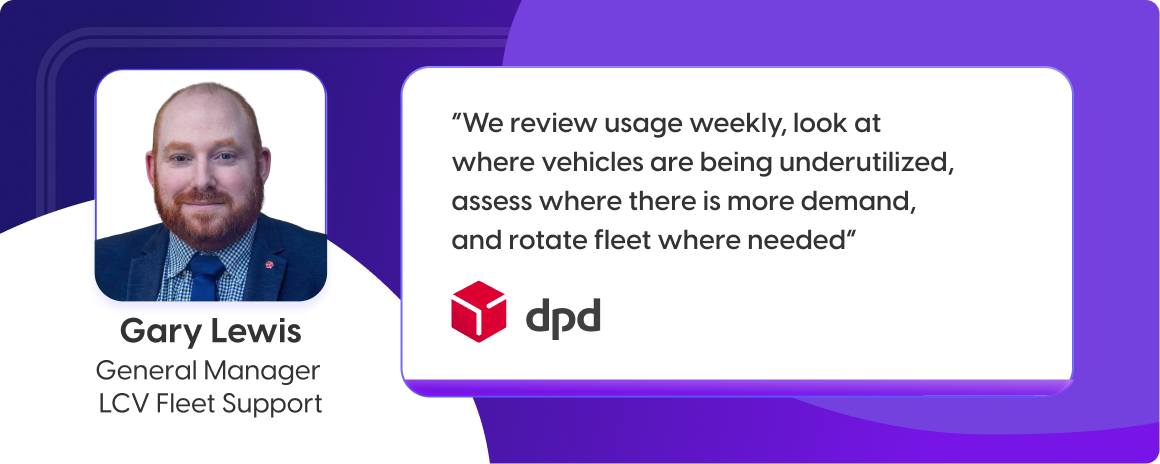
Thank you. I’m Gary Lewis, General Manager of LCV Fleet Support at DPD UK, based in the Midlands, just outside Birmingham.
My role covers supporting our van fleet throughout its lifecycle. That starts with initial vehicle deployment: taking in vehicle orders, deciding where vehicles should be used, arranging the funding methods, and handling the administration around the asset registration, legal compliance, tax, and servicing schedules.
It continues through the life of the vehicle as well. We review usage weekly, look at where vehicles are being underutilized, assess where there is more demand, rotate fleet where needed, and then manage the disposal process at the end of a vehicle’s life.
We currently have a van fleet of around 6,000 vehicles. Roughly 4,000 are electric, and 2,000 are diesel.
What challenge drove your optimization efforts?
To understand why utilization became such a focus for us, you have to go back to 2020. The market for deliveries changed almost overnight. People were at home, shopping habits shifted, and parcel volumes grew very quickly. That meant our fleet had to grow quickly, too.
For a few years we carried that growth forward. By the back end of 2023, we decided it was time to pause and take stock, and ask ourselves a very simple question: how well are we actually using the vehicles we have?
How did the fleet utilization review begin?
It started in a very manual way. We sent more than 20 people across 34 sites on our busiest day of the year. They physically checked which vehicles were still parked after all the parcels had gone out for delivery.
That first audit gave us a crude but very important view. Even on the busiest day of the year, only around 70% of the fleet was out on the road. That told us we likely had too much capacity sitting idle.
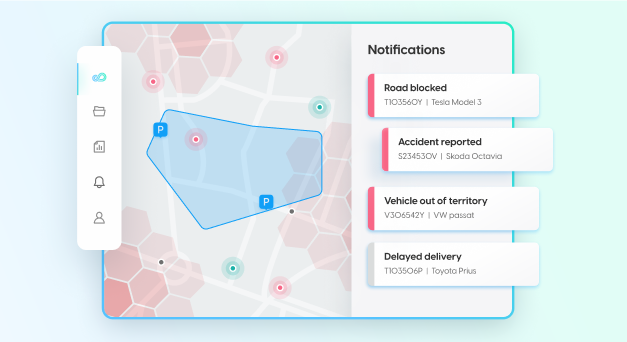
From there, we started building a proper utilization function. We used telematics and geo-fencing around depots and repair sites so we could see, week by week, which vehicles were not moving.
What did the data show you?
Two things stood out.
First, we had surplus vehicles in parts of the network. Some vehicles were not being used because a depot was waiting for a recruit to start, which is understandable. But in other cases, the depot simply did not need the vehicle.
Second, we uncovered unreported defects. Vehicles were sitting unused because they needed repairs, but nobody had told us, because the extra capacity made it easy to just carry on. That highlighted that utilization and uptime have to work together. It is not enough to know where the vehicles are. You also need to know whether they are available, roadworthy, and being properly managed.
What results came from the initiative?
The headline result was that we were able to remove over 900 vehicles from the van fleet, with no drop in delivery volume.
But the impact was wider than the number of vehicles removed. We created more accountability in the depots, improved visibility into unused assets, and put a much stronger focus on downtime.
At one point, average vehicle downtime across scheduled and unscheduled repairs was around 25 days. With twice-weekly management reviews, hotspot analysis, repair network focus, and better root-cause work, we brought that down to around 16 days, and we will drive that number further down.
What KPIs mattered most?
Utilization and uptime were central KPIs we followed, but cost was also a major factor.
In a high-volume, low-margin business, carrying too many assets has a real financial impact. If we have too many vehicles, we are paying for too many vehicles. Reducing unnecessary fleet size, while protecting service levels, directly supports the business.
What was the hardest part of implementation?
The hardest part was not identifying the vehicles. The data made that relatively straightforward. The hardest part came from the structure of the network. We have around 80 delivery depots, and each depot operates almost like its own business unit. A depot manager naturally wants to protect their operation, and it can feel safer to hold on to a few extra vehicles “just in case.”
So the challenge was encouraging teams to trust the wider process. To convince them that if a need arises, we are there to support them. And that keeping a “what-if fleet” at every depot is not efficient.
What advice would you give another fleet team trying to do something similar?
You need the best possible data you can get. We are still improving our data quality, but the better the data, the easier it becomes to build a true picture of what is happening.
You also have to be willing to look at that picture honestly, warts and all. It may not be perfect. It may show you things you did not expect. But you cannot bury your head in the sand. You have to understand the reality and then see the process through.
What comes next for DPD UK’s fleet operations?
The next step is consolidation. We have been working across disjointed systems, spreadsheets, and different tools for too long. We are implementing a new fleet management platform to bring more of that data into one central place.
That should improve communication with our driver network and provide an individual vehicle history. Once we have a richer history file for each vehicle, we can start asking much better questions, such as how often specific components fail on specific vehicle types. That kind of insight can support maintenance, operational planning, and future procurement decisions.
What do you think will matter most over the next three to five years?
Electrification will continue to be key. We are very committed to EVs as a business and as part of the wider Geopost strategy.
But that transition is not without challenges. Payload was one issue early on, although the emergence of 4.25-ton electric vans has helped. Charging is another. Many service partners cannot charge at home overnight and depend on public infrastructure. Depots also have power constraints.
But the direction is clear. The future is more electric, more data-driven, and more connected.
What lesson has stayed with you most?
One person cannot do everything. You need a strong team with a broad skill set, and you need everyone to buy into the process.
That is what made this work. Utilization, maintenance, breakdown and recovery, regional engineers, depot teams, all of it had to come together.
The Rising Star in Mobility Operations Award recognizes emerging leadership in fleet optimization. DPD UK’s story shows what that looks like in practice: a team willing to work together and look honestly at its operation, build better visibility, challenge old assumptions, and turn fleet utilization into a measurable business advantage.
Read more winners' stories here.


Table of сontents

.avif)

