Fleet and mobility operations teams working behind the scenes have become one of the most important drivers of performance improvements in the transportation and logistics industries. This is why the Optimizers Awards program was created: to recognize the people making fleet and mobility operations impactful and better every day.
In the 2026 Optimizers Awards, The Impact Award goes to Kari, a Prince Edward Island-based ride-sharing company serving a quarter of a million rides a year with a two-man team: Matt MacLeod, and Len Currie.
Kari demonstrates what impact an optimized automated dispatching system can have, expanding transportation access across a province spanning both urban and rural areas while keeping the operation lean, scalable, and reliable. It is now the largest on-demand provider in Prince Edward Island and was the first ride-sharing company in Atlantic Canada.
We spoke with Matt and asked him to share more on what made them win the Impact Award, how Kari was built, what makes operating on Prince Edward Island unique, and how automation has become central to the company’s growth.
First, congratulations! Can you introduce yourself and your role?
I’m Matt MacLeod, co-founder of Kari.
Kari is managed and operated by me and my business partner, Len Currie. Between the two of us, we divide up everything: driver onboarding, support, business development, marketing, dispatch oversight, and day-to-day operations.
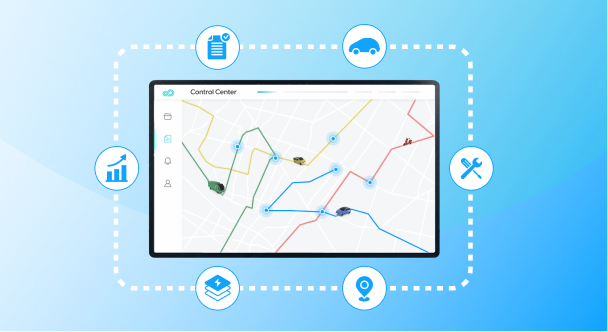
We do not have a dedicated dispatcher. The system runs 100% automatically through the Autofleet platform, and we manually intercept only when needed. It is the two of us ultimately running the company, with the automations acting as the muscle and the brains behind the operation.
Where does Kari operate?
We are based in Prince Edward Island, on the east coast of Canada. We serve the greater Charlottetown area and the entire province.
PEI is an island province, about 300 to 400 kilometers tip to tip. Our goal is to offer on-demand service across the whole island. We do pickup and drop-off province-wide.
In the context of Canada, the entire island would generally be considered rural because of its size. But our central operating area is urban, with Charlottetown serving as the capital city and supporting a population of roughly 30,000 to 60,000 people.
That mix creates a unique challenge. You have urban demand in the center, but you also need to serve long-distance and lower-density areas across the island.
What kind of fleet model do you run?
Kari is a ride-sharing and ride-hailing operation. We work with contract drivers who provide their own vehicles.
We support them with commercial insurance, payment processing, dispatching, and the systems needed to operate. Drivers can work their own hours, but during key times of the day, we can provide top-up opportunities to encourage drivers to be online and ensure they make a guaranteed minimum payment.
What are the challenges or opportunities that you face in Kari?
The main initial driver was opportunity. We knew there was a lack of transportation options in the area. It took a while to work through the regulations and insurance requirements.
We also needed to evaluate multiple software platforms, as some of the earlier solutions were not optimized for our needs as a ride-hailing operation. We needed a passenger-facing app, strong reporting, and the ability to live up to the standard that big ride-hailing players have created. Customers already know what a good ride-hailing experience should feel like, and we had to match that expectation in our own market.
Kari has built some of its own automations. Why was that important?
Having an open API was a necessity for us.
Because of the rural nature of PEI, some rides do not fit standard ride-hailing assumptions. For example, a pickup drive can sometimes take 60 minutes. That is longer than a typical dispatch window, so we built our own bolt-on solutions to dispatch rides earlier and make sure customers are picked up on time.
We also built a flight-tracking system that automatically adjusts pickup times if a plane is delayed or canceled. And we built an AI-driven lost-and-found system that connects riders and drivers through SMS based on keywords in support tickets.
For us, these are not just technical features. They solve real operational problems that come from serving our specific market.
What KPIs guide your decisions?
Completion rate, weekly ride rates, and cancellation rates are key for us.
Growth is how we primarily measure success. Over the past three years, we have grown consistently week over week.
What advice would you give another company trying to replicate Kari’s success?

Do your homework. The best ideas grow organically, and you know your own market better than anyone else. For us, understanding PEI was critical. We knew the transportation gaps, the distances, the regulations, and what riders and drivers needed.
Having a responsive technology partner also matters. Autofleet has been responsive to our ideas and concerns, and that has been important as we continued to improve the operation.
What do you think will matter most in mobility over the next three to five years?
Autonomous vehicles.
In a rural area like PEI, having a driver on standby all the time is not always financially viable. But if an autonomous vehicle could be available to complete a ride when needed, that would be a game-changer for rural mobility.
What lesson has stayed with you most?
You need good, reliable, safe drivers. Without our drivers, this would not be the same company. Our satisfaction rates are high because we have a base of people who believe in what we are trying to do.
The Impact Award is about measurable change: better service, stronger resilience, and meaningful operational improvement created by a focused team. Kari’s story shows what that looks like in practice.
With two co-founders, no dedicated dispatch team, and a highly automated operating model, Kari has shown that sophisticated mobility operations are not limited to large teams or major cities. Sometimes, the clearest proof of impact is a small team building the right system around a real community need, and then scaling it, ride by ride, across an entire island.
Read more winners' stories here.


Table of сontents
V4new%252026.11.jpeg)