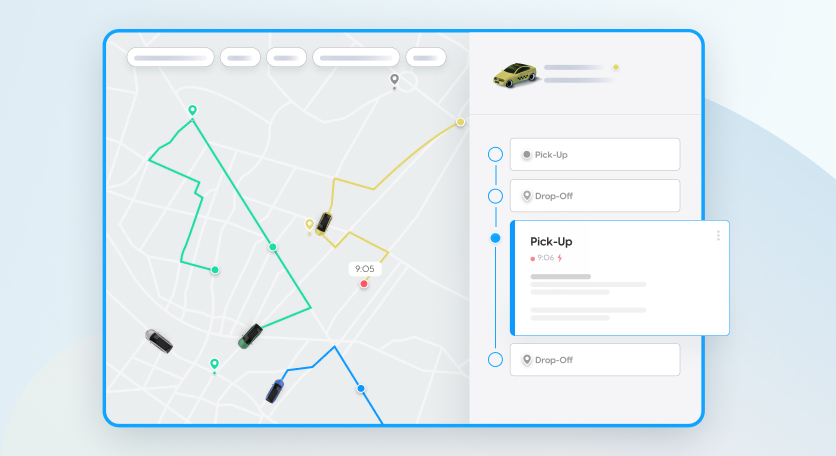

Dispatch in ride-hailing and passenger traffic used to be a whiteboard, a phone, and a lot of tribal knowledge. As fleets grew, and as customers began to expect accurate ETAs, proactive updates, and same-day service, manual coordination became a bottleneck. That’s where dispatch management software comes in: it centralizes job intake, resource planning, driver assignment, and customer communication into a single operating layer.
Modern dispatch systems also reflect a shift in what “dispatch” means. It’s no longer just sending work to drivers. It’s an always-on control loop that balances supply and demand while accounting for constraints like capacity, shift rules, driver training, service zones, vehicle type, priorities, and promised delivery windows. Instead of reacting to problems after they happen, dispatch teams can act before they occur, because they can see changes in real time: delays, traffic, missing check-ins, and unplanned stops.
In addition, fleets now operate across mixed modalities (cars, vans, shuttles, taxis, microtransit, EVs and even bicycles), multiple driver types (gig and contract drivers, part-time and full-time, specialty drivers, etc.), and across multiple service types (scheduled, on-demand, same-day, recurring). A dispatch tool that can’t adapt to different operational patterns, especially when conditions change, ends up forcing teams back to spreadsheets and phone calls. The best real-time dispatch software gives dispatchers a “single pane of glass” with full visibility into operations while also enabling automation, optimization, and exception management.
For a deeper look at live dispatching models, see: What Is Real-Time Taxi Dispatching?
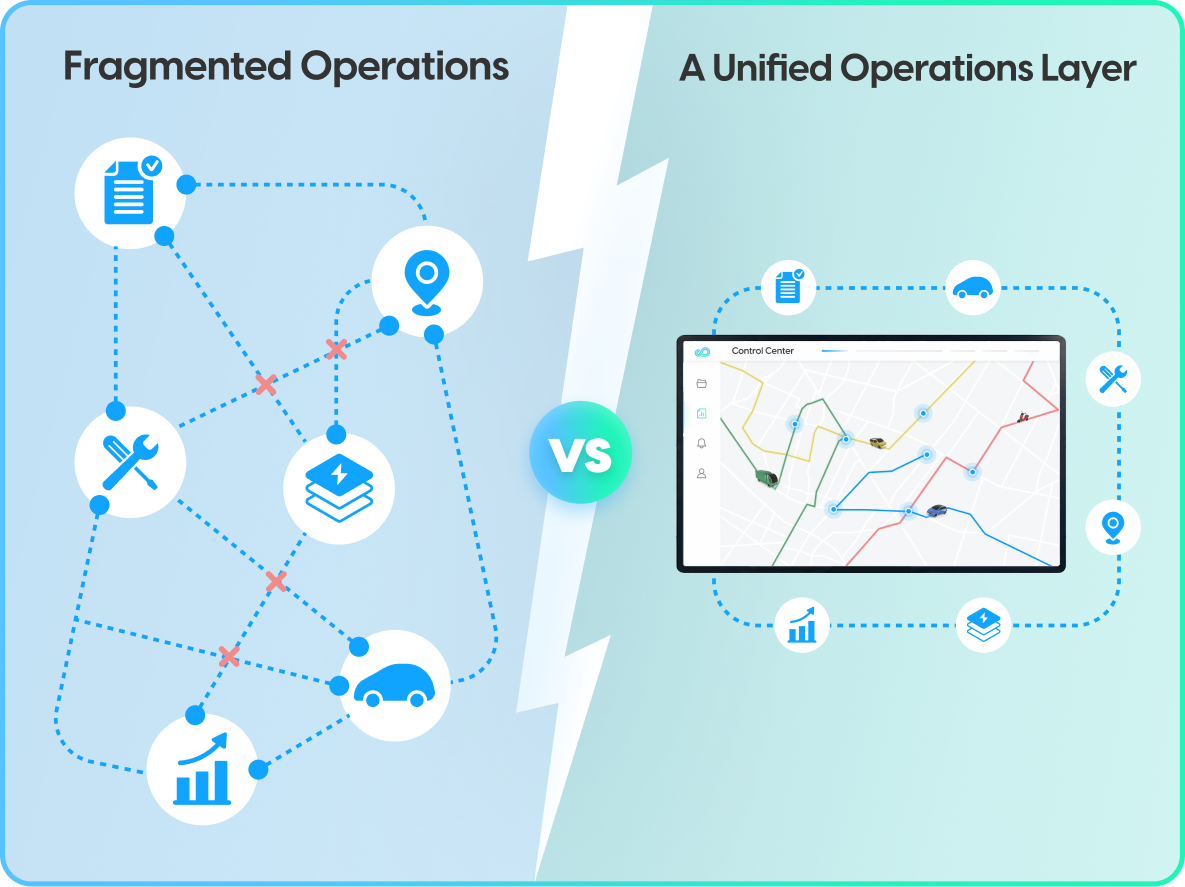
Core Capabilities That Define Effective Dispatch Management Systems
Not all dispatch platforms are built for the same reality. Some are lightweight “job boards.” Others are true operational orchestration systems. When comparing dispatch management software, focus on capabilities that reduce manual work and improve outcomes.
1) Real-time visibility (vehicles, jobs, and ETAs)
You need more than dots on a map. A strong fleet dispatch software should provide:
- Accurate ETAs that update dynamically
- Live job status (accepted, en route, arrived, in service, completed)
- Exception flags (late pickup, deviating route, idle too long)
- Operational dashboards that highlight what needs attention now
2) Smart job assignment and re-optimization
Assignment should consider constraints (driver skills, vehicle type, capacity, time windows, zones) and operational goals (on-time performance, utilization, cost, fairness). Leading systems support:
- Automated assignment rules
- Dispatcher-assisted recommendations
- Batch optimization (plan ahead)
- Continuous re-optimization (continuous planning that adapts as conditions change)
3) Dispatcher-driver communication and proof of work
Phone calls don’t scale, and they don’t create an auditable timeline. Look for:
- In-app messaging or structured status prompts
- Driver acknowledgements and “arrive -> start -> complete” flows
- Proof of delivery/service (photos, signatures, notes, timestamps)
4) Scheduling visibility and shift planning
Dispatch cannot be separated from scheduling. Effective delivery dispatch systems provide:
- Shift and availability management
- Capacity views (per region, service type, vehicle type)
- Forecasting inputs (historical demand, booked jobs, planned routes)
5) Integrations and data foundations
Dispatch must connect to orders, customers, billing, and telematics systems, or they will be running blind.
- Telematics and GPS providers
- Order management systems (OMS), TMS, WMS
- CRM and customer support tools
- Data exports, webhooks, APIs, and reporting
6) Control center and exception management
You must have a control center to see when things go wrong (and provide you with the tools to fix them). Look for:
- Auto-escalations based on SLA thresholds
- Reassignment and rerouting tools
- Customer notifications triggered by changes
- Operational playbooks and reason codes
You should also invest in automation beyond dispatch (e.g., driver workflows, service rules, exception handling). This overview may help: Top 10 Fleet Automations in Autofleet
10 Dispatch Management Software for Fleet Operations
Below are ten dispatch tools used across fleet and passenger mobility operations. Each supports dispatch in a different way: from enterprise-grade orchestration to specialized routing and passenger transport platforms.
Autofleet
Autofleet is built for fleets that need more than basic assignment, especially when running multiple service types (scheduled routes, on-demand demand-response, same-day deliveries, shuttles, corporate transport, or hybrid operations). As dispatch management software, it acts as an orchestration layer that connects orders, capacity, routing, and real-time execution.
What stands out is the ability to manage dispatch as a control-tower workflow: continuously optimizing assignment, tracking performance against targets, and enabling fast intervention when exceptions happen. For fleets scaling across regions, vehicles, and service tiers, Autofleet’s strength is operational consistency, ensuring dispatch decisions follow defined rules instead of relying on individual dispatcher intuition.
Best for: enterprise fleets and mobility operators that need optimization and real-time execution across complex workflows.
Why it matters: dispatch becomes repeatable, measurable, and adaptable in live operations. Easy customization and automation to match any need and requirement. Able to handle huge volumes with ease.
OptimoRoute
OptimoRoute is used for route planning and dispatch in delivery and field service operations. It’s often evaluated when teams need strong day-to-day routing, workload balancing, and execution visibility, especially for multi-stop operations with time windows.
Best for: route planning and dispatch for small to medium delivery & field service.
Strength: routing optimization and execution workflows.
RideCo
RideCo is associated with microtransit and on-demand public mobility services. Dispatch in this context differs from classic taxi dispatch because the system must consolidate trips (pooling), coordinate shared rides, and meet service constraints (coverage, wait times, detours, accessibility).
Best for: microtransit, DRT, on-demand public mobility.
Strength: on-demand service logic and rider experience focus.
iCabbi
iCabbi is a well-known platform in the taxi and private-hire ecosystem. It’s designed around booking-led dispatch workflows where customer demand, driver availability, and operator rules need to be managed at small to medium scale.
Best for: taxi and private-hire dispatch.
Strength: booking-led dispatch workflows for taxi/private hire.
TripSpark
TripSpark is commonly used in passenger transport contexts such as fixed-route support, demand response, and NEMT. It’s relevant when dispatch is closely tied to passenger schedules, service rules, and operational reporting needs.
Best for: public transit, demand-responsive transit (DRT), and NEMT operations.
Strength: scheduling and dispatch tools for passenger transport operations.
Spare
Spare is associated with demand-responsive transit (DRT) and microtransit operations. Platforms in this category focus on configuring service parameters, managing rider and driver experiences, and supporting day-of operational changes.
Best for: DRT and microtransit programs.
Strength: configurable DRT operations and service management.
Trapeze Group
Trapeze Group is commonly associated with passenger transport operations, including public transit and paratransit. In these environments, dispatch and operations need to align service delivery with schedules, capacity, and service rules while giving operations teams tools to manage day-of exceptions and maintain reliability.
Best for: passenger transport operations with fixed routes (public transit & paratransit).
Strength: scheduling and operational workflows designed for passenger mobility services.
RouteGenie
RouteGenie is often discussed in the context of paratransit and NEMT, where dispatch workflows center around passenger trips, eligibility constraints, recurring schedules, and day-of changes.
Best for: paratransit and NEMT scheduling & dispatch.
Strength: passenger-centric routing and scheduling and day-of operations support.
TRC
TRC provides a dispatch and booking solutions designed around traditional operator workflows. For fleets transitioning from radio-based operations to app-driven execution, TRC can support structured processes while modernizing parts of the workflow.
Best for: taxi/radio dispatch operations.
Strength: dispatch tools aligned with traditional taxi workflows.
Via Transportation
Via Transportation provides microtransit and demand-responsive public mobility. It supports on-demand trip matching, service configuration, and operations workflows for public agencies and private mobility programs.
Best for: microtransit, DRT, and on-demand public mobility programs.
Strength: on-demand dispatch and service configuration for passenger transport.
Where Dispatch Inefficiencies Typically Occur in Fleet Operations
Dispatch inefficiencies rarely come from a single root cause. They usually occur where handoffs, visibility, and decision-making break down.
Delayed or suboptimal assignments
- Jobs sit unassigned because dispatchers are overloaded
- Assignment decisions ignore constraints (capacity, time windows, vehicle type)
- “Nearest driver” logic creates downstream delays later in the route
Poor communication and missing status updates
- Dispatch relies on phone calls and informal messaging apps
- Drivers forget to confirm arrival/completion
- There’s no shared timeline of what happened and when
Lack of visibility across scheduling, routing, and execution
- Booking is done in one tool, dispatch in another, and routing elsewhere
- Dispatchers can’t see planned workload vs. actual workload
- ETAs are static and do not reflect live conditions
Exception handling is manual
- Late arrivals and cancellations are discovered too late
- Reassignments happen without understanding the downstream impact
- Lack of visibility leads to customer service and dispatch work from different versions of “the truth”.
Integration gaps create duplicate work
- Orders are re-entered manually
- Driver data is siloed from telematics
- Reporting requires exports and spreadsheet cleanup
How Dispatch Software Improves Operational Control and Resource Allocation
The biggest value of real-time dispatch software is operational control: the ability to make faster, better decisions with confidence.
Faster decisions with real-time insights
When job status, vehicle positions, and ETAs update live, dispatch can intervene early and even automatically. Instead of reacting to “the driver is late” after the customer complains teams can reroute, reassign, or notify customers proactively.
Better resource allocation, utilization, and service level
Modern dispatch management software helps balance competing objectives:
- Utilization: keep vehicles productive and reduce deadhead time
- Service level: hit pickup windows, delivery SLAs, and promised ETAs
- Fairness and compliance: respect shift rules, zones, and driver constraints
Optimization and rules-based assignment mean the best decision isn’t dependent on who is at the dispatch desk, and it’s repeatable across regions and teams.

Reduced operational bottlenecks
By replacing manual tasks (copy/paste, phone calls, checking multiple systems), dispatchers can manage more volume with fewer disruptions and are free to handle strategic decisions. A well-designed delivery dispatch system also reduces “hidden work” like chasing confirmations and reconciling what happened at the end of the day.
Improved customer experience through transparency
Customer notifications, accurate ETAs, and consistent service are direct outputs of good dispatching. When the dispatch layer is trustworthy, customer support teams can rely on the same operational reality, reducing escalations and improving satisfaction.
What To Prioritize When Selecting Dispatch Software for Your Fleet
A shortlist is easy. Picking the right tool is about fit, not features. Specifically, make sure to match the dispatch model to your operation, and the scale and complexity you face, not just today but as your fleet grows and as you enter new markets.
Routine dispatching should be handled automatically, leaving your dispatchers to manage more complex scenarios and strategic decisions. Make sure to evaluate exception handling, not just baseline performance. Pay special attention to re-optimization capabilities and to responsiveness to unpredictable events.
The integration is another key parameter. Passenger transport routing and dispatching should not be treated as a stand-alone system. Make sure you have a clear understanding of how the system integrates with telematics, booking systems, customer communications, and other systems of record. Also, make sure you have a reporting pipeline in place so you can monitor performance both in real time and over extended periods.
If you need advice, feel free to reach out to one of our experts for a chat.


Table of сontents