


Switching to electric vehicles makes a lot of sense for last-mile fleets, but the routing that worked for internal combustion engine (ICE) vehicles will quickly break down once you switch to electric. Route feasibility is no longer just distance plus time. You also need to account for the state of charge, charger availability, weather, EV type, and charging speeds.
What is EV routing for last-mile delivery?
EV routing is charging orchestration, not just stop sequencing. It combines route planning, dispatch, charging-stop planning, and energy prediction to keep deliveries on time. Without it, the result isn’t just wasted miles but failed routes, higher charging costs, and missed service-level agreements (SLAs).
EV energy consumption is affected by numerous external and operating factors, including temperature, payload, terrain, and driver behavior. The same goes for charging; the type of charger and the vehicle's state of charge affect how quickly it can be back on the road.
Classic route optimization focuses on distance and time. With EV routing, there’s an additional consideration before you even think about changing work requirements and delivery windows.
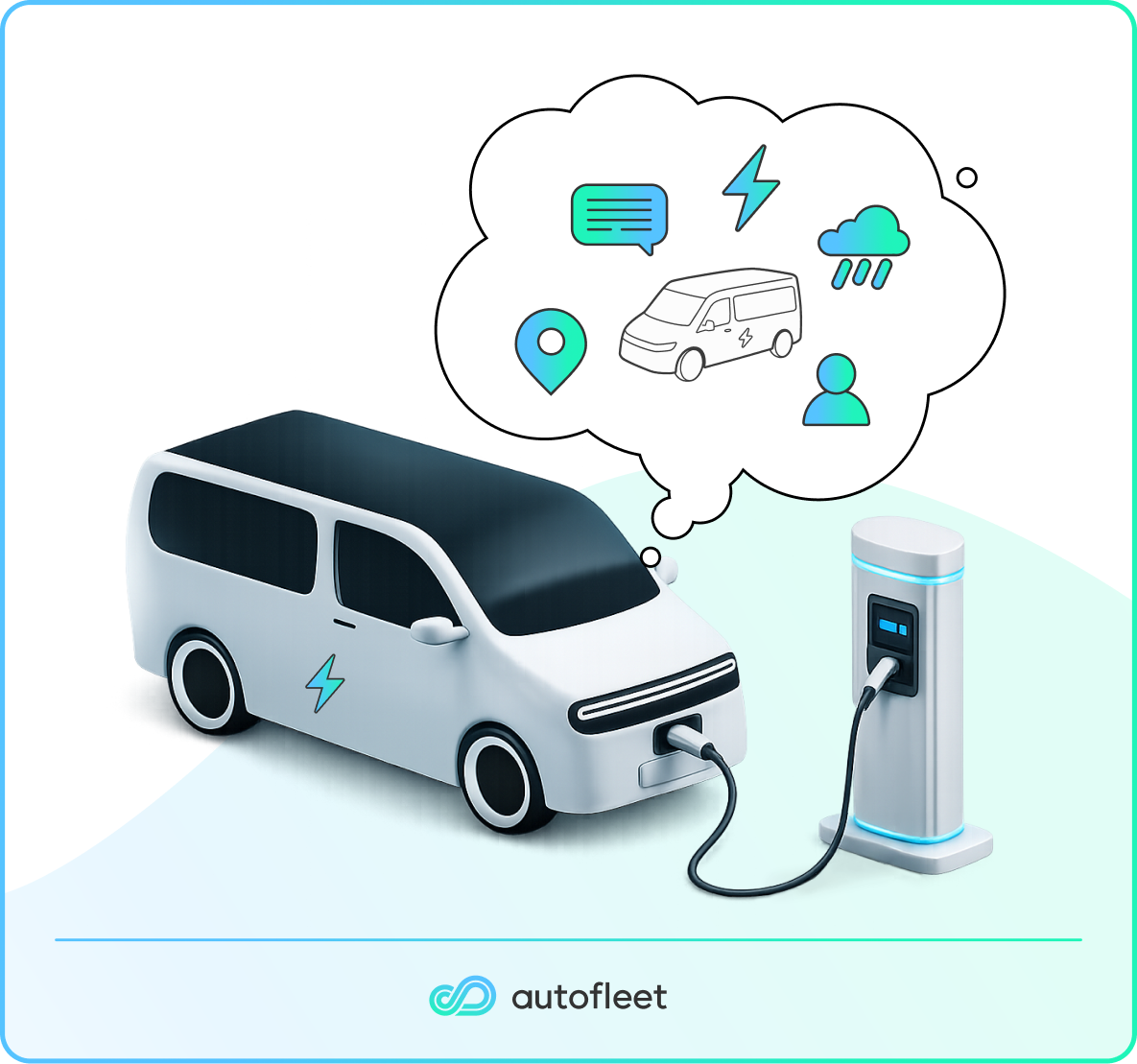
The six constraints operators can optimize in routing
To tackle the EV routing problem (EVRP), your system must account for these constraints:
State of charge and usable range
Because EV range varies, dispatchers should plan based on actual energy availability rather than stated range. On some days, the vehicle might exceed the brochure range; on others, it might miss it. That means monitoring the state of charge and real-time energy use to avoid dispatching vehicles to jobs they can’t complete.
Charging strategy
There are numerous charging options to consider. Can a vehicle be charged overnight at the depot? Is a full charge necessary every time? How much would charging on the roads cost you?
For most fleets, overnight charging is the best option, but that’s not always practical for higher-mileage vehicles. In those cases, charging needs to be timed and planned to minimize cost and maximize uptime.
Charger reality
Charging a vehicle isn’t always as simple as plugging in to get the expected power at the expected rate. Sometimes vehicles have to share power, there might be queues, or drivers could face broken chargers. Real-time data can help drivers find the most suitable charger, not just the closest one.
Route feasibility under time windows
Charging dwell is not just dead time. It competes with service windows, break-time rules, and traffic. A route that looks fine on paper can become infeasible if cold weather, traffic, or payload increase energy use, or if a charger you planned on using isn’t available.. EV routing has to judge whether the vehicle can still hit every stop on time while leaving enough charge for the rest of the shift.
Mixed fleet routing
Most fleets still use a mix of vehicle types. You might have both electric and ICE vans, but you might also use mopeds, cargo bikes, or foot delivery. All need to be taken into consideration when planning your routes. Longer journeys still might be served by ICE or hybrid vehicles, while urban areas are best suited to electric vans or a micromobility solution.
Dynamic re-optimization for real-world volatility
To avoid missed deliveries and delays, EV routing must adapt to real-world changes. If a driver calls in sick, a fast charger is occupied, or a vehicle hits unexpected traffic, your system should adjust before the delay impacts SLAs. It should re-optimize based on whether the vehicle can still complete the route on time.
Implementation playbook
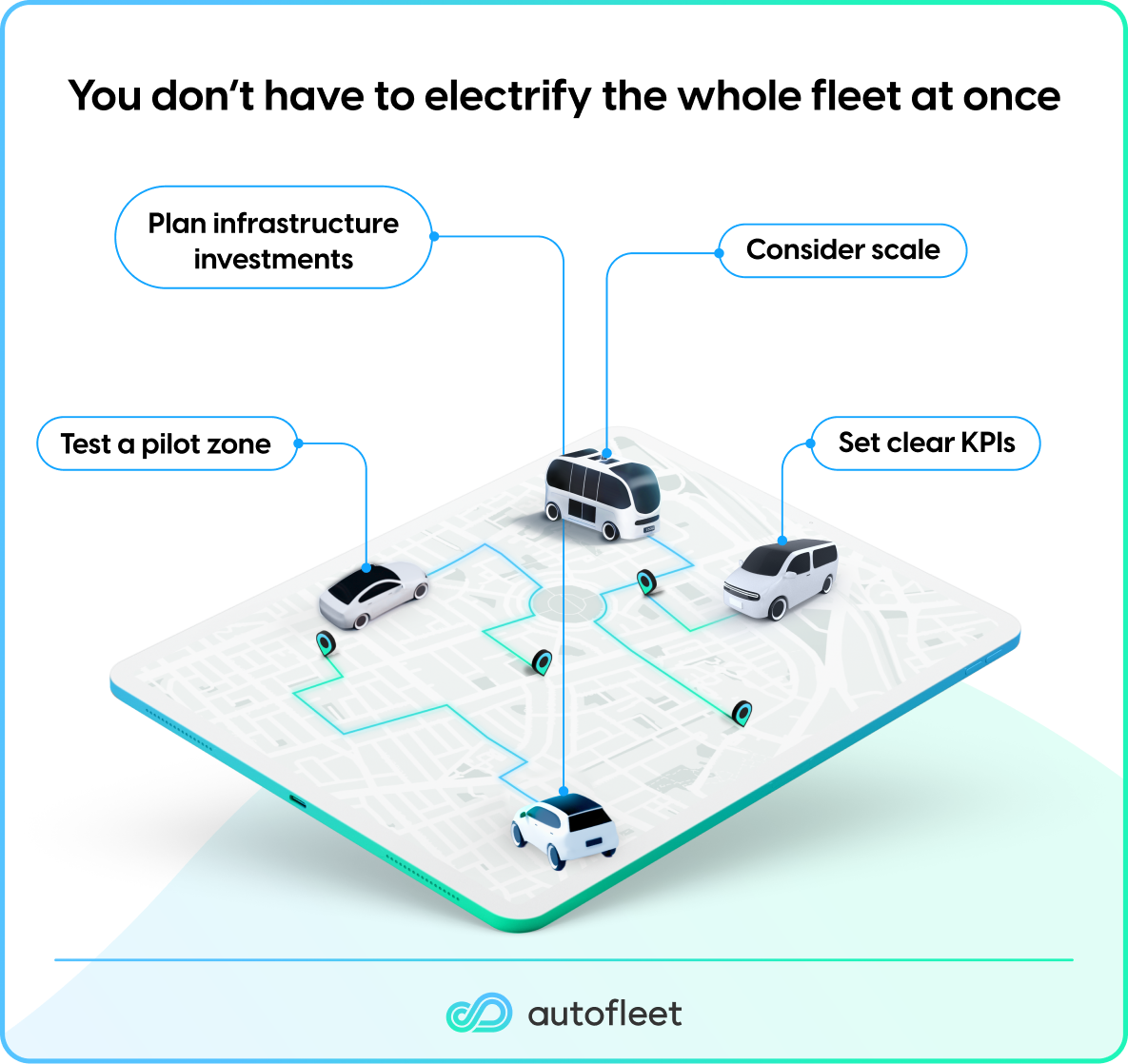
You don’t have to electrify the whole fleet at once. Start with:
- Test a pilot zone: Before full rollout, start with a few vehicles in one area. Set KPIs, run simulations, assess and adjust, then scale.
- Plan infrastructure investments: Your simulations might show that your electric fleet is much more cost-effective if the vehicles can charge overnight at your depot.
- Set clear KPIs: Based on your pilot, monitor percentage on time, miles per stop, energy per stop, charger dwell time, failed route rate, and energy costs.
- Consider scale: As your business grows or you roll out more electric vehicles, your electric delivery fleet route optimization platform must support millions of deliveries and large driver bases.
EV routing readiness checklist
Before implementation, confirm your operation includes:
- Real-time state-of-charge data that feeds into your routing engine
- The ability to treat charging stops as time-constrained, not just waypoints
- Charger locations, speeds, and availability
- Routes tested against worst-case range estimates
- The ability to plan Mixed fleet routes
- KPIs, including energy per stop and charger dwell time, not just on-time %
Electric vehicles can deliver major benefits for last-mile fleets, but only when routing reflects how they operate. Build around energy, charging, and real-world constraints, and EVs become far easier to scale and run profitably.


Table of сontents

%25C2%25A0V2%2520WS.jpeg)

