


Why rental and leasing companies are sitting on an untapped B2B revenue channel
B2B rental providers are not starting from zero. When you already have the assets, procurement expertise, and finance processes in place, B2B rental isn’t a huge leap. It's an adjacent operating model which means you don’t have to start from scratch to tap into a new revenue channel. B2B rental providers already have commercial relationships with businesses that need vehicles. Many corporate customers require flexibility for temporary projects, seasonal demand, and fleet transition periods. This is where rental comes in.
This not only helps you better serve your customers but also improves utilization. The key here isn’t to treat your B2B rental fleet as a separate pool from your other vehicles. It should be connected to wider fleet planning, lifecycle, maintenance, and account management.
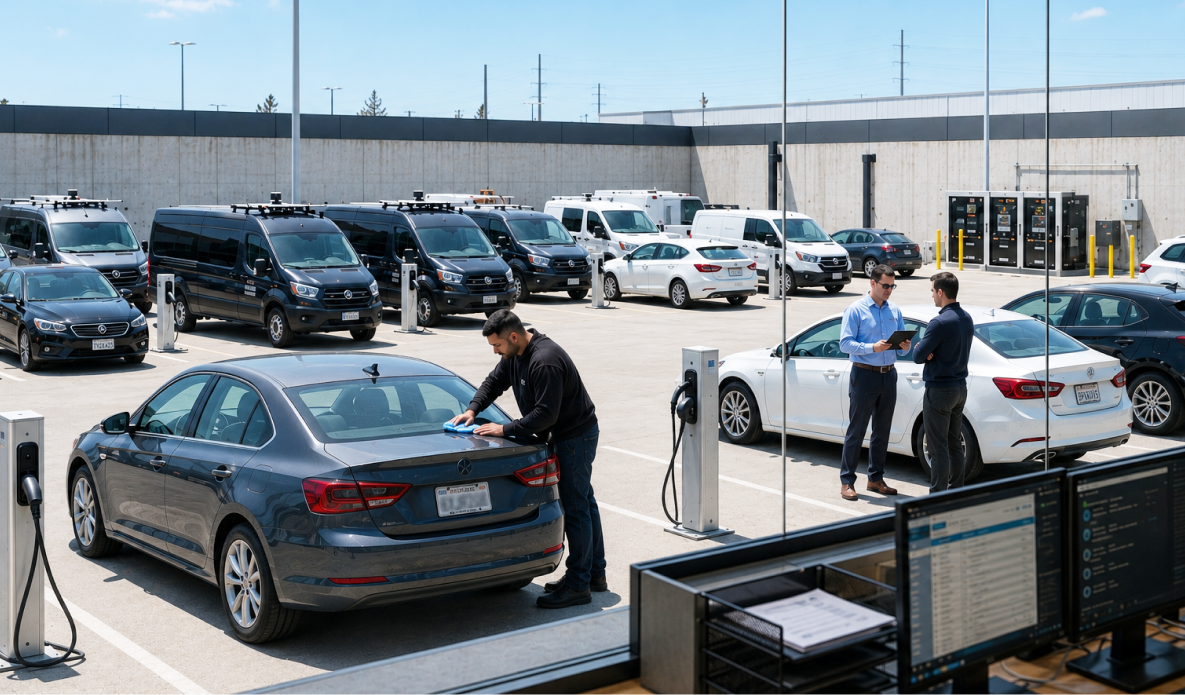
What corporate clients need from a B2B car rental program
There’s an important distinction to be made between consumer rentals and business rentals. Renting passenger vehicles to individuals tends to be short-term, while B2B rentals are often over longer periods and structured in a similar way to fleet management contracts. They also often have specific vehicle requirements that need to be met.
Corporate customers need control over multiple facets of the rental procedure as well as clarity and security. This includes:
- Commercial control: negotiated rates, total-cost transparency, billing, invoicing, and savings measurement.
- Operational reliability: availability, vehicle quality, coverage, SLA performance, support, and specific vehicle requirements.
- Governance: policy controls, approvals, insurance rules, driver eligibility, and audit trails.
- Traveler experience: fast booking, counter-bypass, loyalty, mobile support, flexibility, and issue resolution.
- Data and strategy: reporting, integrations, sustainability metrics, account reviews, and continuous optimization.
Corporate car rental customers are buying reliability, not just access to a vehicle. This is why your existing relationships can be powerful here. The value sits in availability, readiness, reporting, policy control, and the ability to scale as demand changes.
How fleet operators can unlock B2B car rental revenue
For this to work, you need the right tools in place to connect your various inventory pools, properly allocate vehicles, and manage delivery and collection. Here are the capabilities to look for when comparing fleet management solutions.
1. Connect all rental inventory in one view
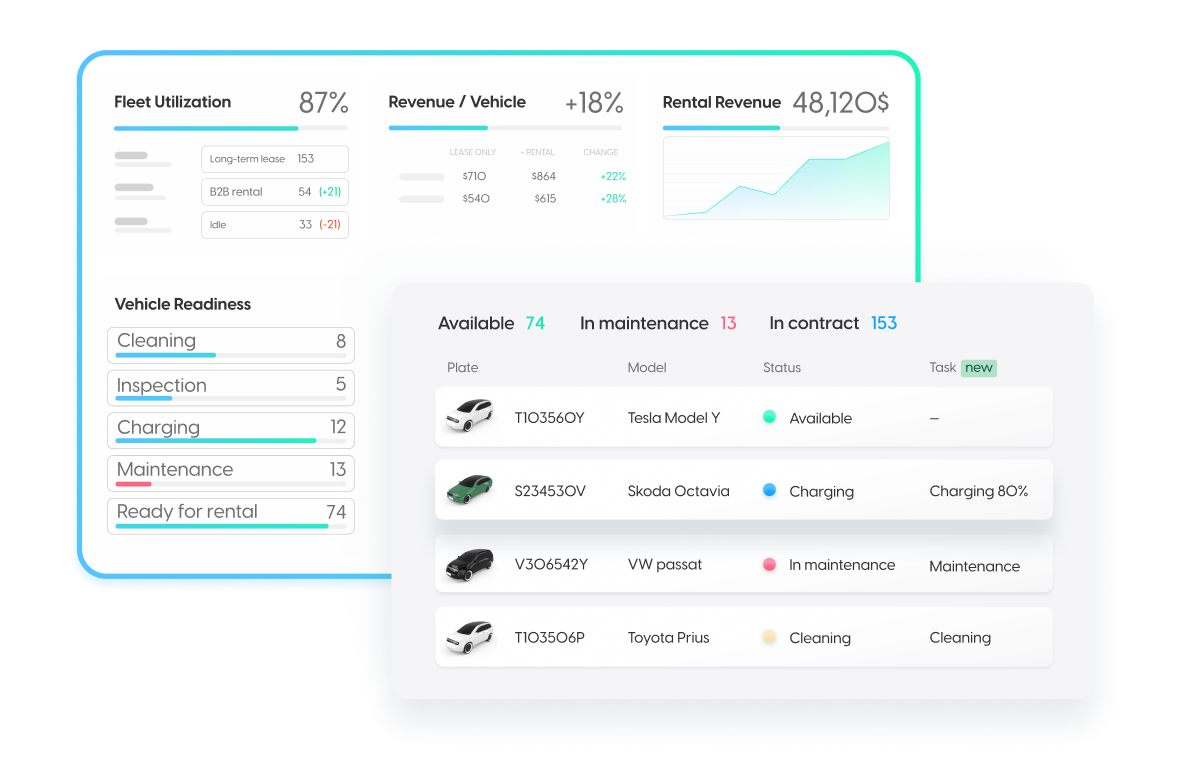
To make the most of B2B rental, you need total visibility across the fleet. This means tracking every asset, whether it’s currently on a contract, ready for rental, undergoing maintenance, or sitting at a depot. You must identify which vehicles are blocked for repairs, due for inspection, returning from a client, or specced for a specific corporate account.
The right software will enable you to track vehicles, drivers, maintenance, and other tasks in one system. If all these systems are separate, adding corporate car rental as a new revenue stream will never be as lucrative.
2. Use demand-based allocation and repositioning
A B2B rental provider for corporate rental needs to decide which vehicles should be held for long-term demand, short-term corporate needs, replacement use, seasonal peaks, or remarketing. A good system should allocate assets based on demand, location, vehicle type, readiness, account priority, and revenue opportunity.
3. Automate vehicle readiness workflows
Corporate rental revenue depends on vehicles being ready to earn. That means cleaning, servicing, maintenance, charging, inspections, and release back into inventory need to be orchestrated around demand.
4. Manage delivery and collection
B2B rental requires flexibility in vehicle pick up and drop off, removing dependence on the front desk of a depot being open, and it often involves getting vehicles to the customer rather than expecting every driver to collect from a branch. That creates a routing, driver, timing, and resource allocation problem. The right car rental fleet management solution can solve this, as long as delivery and collection are built into the operating model.
5. Integrate telematics, billing, and accounts
B2B rental needs accurate mileage, fuel or charge levels, driver behavior metrics, location, damage events, and return status. This helps corporate customers manage spending and ensures your team can see the big picture.
This improves analytics and reporting for both you and the customer. It also means you can tie customer accounts for leasing and rental together for easier billing and management.
6. Model your fleet mix before scaling
Scaling your B2B rental fleet isn’t as simple as opening up inventory and hoping the economics work. It’s important to model the right mix of long-term lease, flexible rental, electric vehicles, branches, depots, drivers, and demand.
Operational challenges
There are some common failure points for leasing companies looking to add B2B rental. It’s important to consider these and what you can do to mitigate those risks.
Inventory visibility
B2B rental providers may know which vehicles they own or manage, but not always which vehicles are immediately usable for rental, where they are, what state they are in, or what work is pending. Software that provides a single operational layer to track vehicle status and readiness can help solve this.
Cannibalising long-term leasing revenue
If every vehicle were to be thrown into short-term rental without strategy, this could affect long-term revenue stability. Proper planning using simulations can help you find the right mix of vehicles for different contract lengths.
Vehicle readiness and downtime
A rental vehicle needs to be cleaned and checked more often than a longer-term lease vehicle. It’s important to automate as much of this as possible to reduce downtime after a vehicle has been returned.
Find the right fleet management solution, and you’ll be able to automate readiness workflows so vehicles are blocked, serviced, cleaned, and inspected according to demand and priority.
Multi-location allocation
Demand won’t always appear where the vehicles are. Use demand prediction, rebalancing, and delivery/collection workflows to move vehicles around before the gap becomes a missed booking.
Corporate account complexity
Corporate accounts may need approved drivers, special rates, usage rules, cost centres, reporting, billing cycles, and SLA commitments. To manage this, your fleet management software should support role-based access, custom fields, historical reporting, audit trails, and business-specific KPIs.
Solution integration
B2B rental providers may rely on a mix of legacy systems, manual workflows, spreadsheets, and third-party platforms that do not easily connect with new tools. Even when a new solution adds value, integrating it without disrupting daily operations, data accuracy, or existing processes can be a major challenge. Providers that know fleet operations offer flexible integrations, clean data flows, and a gradual rollout path can help reduce friction and support adoption.
EV charging and energy planning
Electric vehicles can be valuable rental assets, but they add new variables to your workflows. It’s not just about when to charge the vehicle; you need to consider charger availability, dwell time, and energy cost decisions. This means charging should be planned around future bookings and demand.
Proving profitability
If you’re starting with a pilot of rental vehicles, it’s important to prove profitability from day one. More bookings don’t necessarily mean better margins as delivery, cleaning, and repositioning costs soon add up. It’s best to track KPIs such as utilization, downtime, cost per rental, revenue per vehicle, total cost of ownership, and planned vs actual performance.
For fleet operators, B2B car rental is a natural extension of the assets, relationships, and operational expertise already in place. The challenge is making it work without creating extra complexity for the fleet team or weakening the core business.
That is where fleet management software becomes essential. The right system helps you understand where capacity exists, which vehicles should serve which type of demand, and what needs to happen before each vehicle can generate revenue. It connects rental activity to wider fleet planning, so B2B rental becomes part of a controlled, profitable operation rather than an isolated side project.


Table of сontents
.avif)


